
Can International Banks Open Accounts Without Your Original UK Incorporation Certificate?
Discover whether international banks can open a business account without your original UK Certificate of Incorporation. Learn which digital documents banks accept, what verification is required and how to avoid application delays.
International banks generally require a certified digital or physical copy of your UK Incorporation Certificate, meaning an original paper document is not strictly mandatory. However, financial institutions must inspect official company details, director credentials, and legal registry data to fulfil anti-money laundering regulations before opening a corporate account.
How Do International Financial Institutions Verify Non-Resident UK Companies?
International banks authenticate non-resident UK entities by verifying public corporate filings directly against official registry databases. Compliance officers match director identities, confirmation statements, and registered office addresses with Companies House records to satisfy cross-border anti-money laundering standards.
Cross-border banking compliance requires rigorous validation of corporate existence. Overseas financial institutions inspect official UK public records to confirm entity legitimacy before initiating account onboarding procedures.
Bank compliance officers review the public register maintained by Companies House. Officers match director identities, registered office addresses, and share capital structures against submitted application files. Digital cross-referencing allows institutions to validate company status without relying exclusively on legacy paper certificates.
International regulations demand clear ultimate beneficial ownership data. Compliance teams cross-examine corporate structures against official confirmation statements and people with significant control registers.
When international banks evaluate non-resident corporate accounts, they prioritise verifiable legal standing over document format. Institutions verify that a business maintains active registration and complies with annual reporting obligations.
What Corporate Documents Do Overseas Banks Require During Onboarding?
Overseas banks require a valid Certificate of Incorporation, Memorandum and Articles of Association, proof of registered office address, and identity documentation for all directors and beneficial owners. Financial institutions often request certified copies or digital authentication to complete legal background checks.
Corporate account creation demands specific administrative documentation. Banks request foundational corporate papers to verify statutory compliance and legal entity structure.
The standard documentation package includes the Memorandum and Articles of Association alongside individual director identification. Institutions review these internal governing rules to confirm signing authority and corporate management mandates.
Banks request recent proof of address for registered offices and operational management. Verification requires official government correspondence, utility statements, or formal corporate registry certificates issued within specified timeframes.
Overseas compliance departments frequently require official certification for foreign documents. International institutions demand clear, legible copies verified through official government channels or legal representatives to ensure document authenticity.
Can Digital Certificates Replace Physical Document Originals for Bank Applications?
Digital incorporation certificates containing verifiable security elements replace physical originals for most international banking applications. Overseas institutions accept official PDF certificates when compliance officers can independently validate digital records against official UK registry databases.
Digital transformation has restructured international banking verification protocols. Financial institutions accept electronic corporate documents equipped with verifiable security features and official registry credentials.
Modern registry systems issue official PDF certificates immediately upon successful company registration. These electronic files contain unique security keys and legal formatting equivalent to printed certificates.
Overseas compliance systems inspect electronic files for official authentication markers. Officers verify digital signatures, statutory text, and unique company numbers against central registry databases.
Some foreign jurisdictions still prefer physical documentation with legal certification. When international banks process corporate applications, processing times depend on Companies House processing and exclude weekends and bank holidays.
How Does Document Certification and Apostille Impact International Account Opening?
Apostille legalisation and certified document copies provide legal authentication for international banks operating in Hague Convention countries. Overseas institutions require apostilled certificates to validate foreign corporate records under international legal frameworks.
Cross-border financial transactions require legal document authentication across international borders. The Hague Apostille Convention establishes a standardised framework for validating foreign public documents.
An Apostille certificate attaches to official company papers to confirm signature authenticity and public seal legitimacy. International banks outside the UK frequently require this formal validation step before processing corporate applications.
Certified public accountants or legal professionals notarise corporate document copies prior to government legalisation. This multi-step process provides foreign financial institutions with legal assurance regarding document accuracy.
International compliance standards vary significantly by geographical region and banking jurisdiction. Financial institutions in non-Hague jurisdictions may require additional consular legalisation steps to approve corporate account documentation.
What Are the Main Causes of Delay in Overseas Corporate Account Approval?
Incomplete documentation, missing director identity proofs, unverified operational addresses, and uncertified corporate filings cause the primary delays in overseas account approval. Application errors or unverified company details trigger mandatory compliance holds and extended review cycles.
International corporate account applications face strict regulatory scrutiny. Compliance departments reject applications that display administrative discrepancies or unverified operational information.
Inaccurate director details create immediate processing delays. Financial institutions cross-reference submitted personal identification against international sanctions lists and official registry filings.
Mismatched corporate information generates administrative holds. Discrepancies between application forms, Articles of Association, and official public filings force compliance officers to halt application evaluation.
Application processing times expand when documents lack required certifications. Delays can occur when information or documents are incomplete or incorrect, or when technical or application-related complexities require additional processing.
How Can Non-Resident Directors Secure Certified Corporate Records Quickly?
Non-resident directors secure certified corporate records by ordering official duplicate certificates and filing extracts directly through professional company services. Digital delivery options provide rapid access to legal documents required for international banking compliance.
Overseas business owners need reliable administrative access to statutory corporate records. Establishing a UK company online requires submitting complete details, and a company can be formed online in as little as 3 working hours when complete and accurate information is submitted and all necessary legal and ID checks are completed.
Directors access legal administrative details through secure digital management portals. Your Web Filing Authentication Code will be provided online through your company summary page for direct statutory filings.
Obtaining replacement corporate documentation requires official registry requests. Directors order official duplicate filings to replace lost papers or satisfy strict bank onboarding requirements.
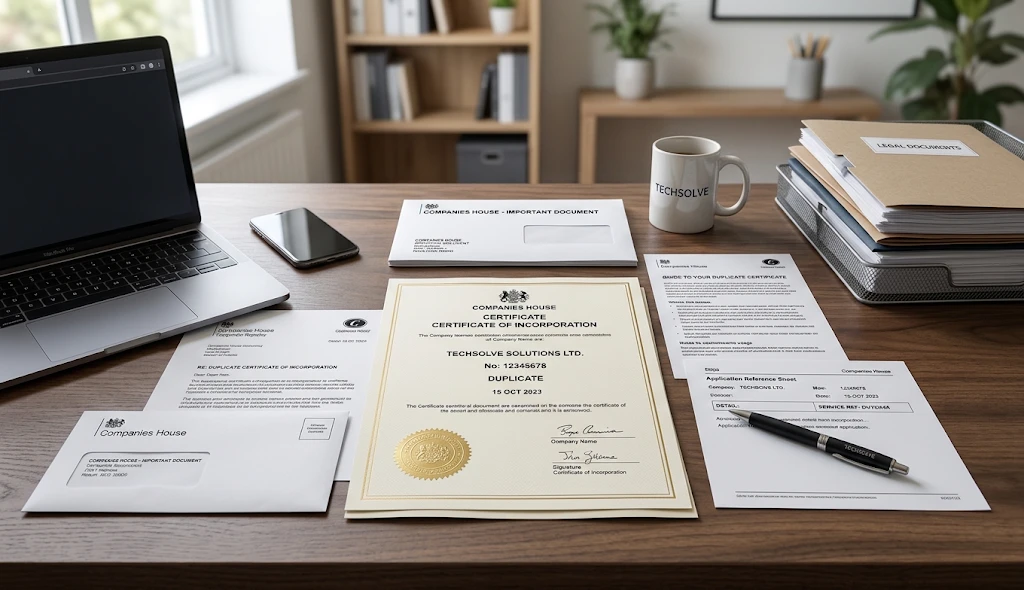
Businesses maintaining international operations utilise streamlined document retrieval solutions. Entrepreneurs acquire official corporate replacements through a Duplicate Certificate of Incorporation to meet foreign compliance deadlines.
What Steps Should Non-UK Residents Take to Maintain Bank Compliance?
Non-UK residents maintain bank compliance by submitting annual confirmation statements, updating director details immediately, filing timely financial accounts, and keeping official statutory registers current. Consistent registry updates prevent account freezes and administrative penalties.
Ongoing administrative diligence protects international corporate banking relationships. Financial institutions perform periodic compliance reviews on active corporate accounts.
Companies must submit annual confirmation statements to Companies House without interruption. Failure to maintain annual registry filings signals corporate inactivity and triggers automatic bank compliance inquiries.
Directors must report corporate structure modifications immediately to official registries. Promptly filing changes to beneficial ownership, director appointments, or registered office addresses maintains bank record alignment.
Understanding specific administrative requirements prevents corporate status issues. Directors review rules by Understanding MadeSimple Eligibility Rules for UK Corporate Document Replacements to ensure uninterrupted compliance coverage.
How Do International Banking Requirements Vary by Jurisdiction?
International banking requirements vary based on local anti-money laundering laws, regional tax treaties, legalisation standards, and institutional risk profiles. Financial institutions in different countries apply distinct verification protocols for foreign corporate account applicants.
Global banking regulations mirror regional regulatory priorities and legal systems. European Union institutions operate under strict anti-money laundering directives requiring comprehensive beneficial ownership reporting.
Asian financial hubs often demand physical document inspection alongside certified corporate filings. Compliance teams in these regions frequently require notarised translation of official documents.
Offshore financial centres focus heavily on tax residency self-declarations and economic substance metrics. Institutions evaluate corporate operational presence alongside foundational registration records.
Understanding regional compliance nuances speeds up corporate account onboarding. Non-resident entrepreneurs must align document preparation strategies with specific regional banking standards.
International banks can open corporate accounts without physical original UK incorporation certificates when provided with certified digital records or officially legalised document copies. Overseas financial institutions rely on direct verification against public corporate registries to confirm legal entity status and compliance standing. Maintaining accurate company filings, securing required apostilles, and utilising official replacement services ensures non-resident entrepreneurs meet international banking standards efficiently. Non-Resident UK Company Formation provides dedicated support to help international directors navigate corporate administration and maintain legal compliance across borders.



0 comments
No comments yet — be the first to share your thoughts.