
How Do You Maintain Your UK Company Register and Records Remotely From Overseas?
Learn how to maintain your UK company register and statutory records remotely from overseas. Understand record-keeping requirements, document management, compliance responsibilities and practical ways to keep your business records accurate and up to date.
You maintain your UK company's register and records remotely by accessing statutory registers online, filing annual confirmation statements through Companies House WebFiling, maintaining a compliant UK registered office address, updating PSC details, and securely storing accounting records digitally for six years.
Maintaining statutory compliance from outside the United Kingdom requires strict adherence to corporate governance protocols. International directors must satisfy UK legal requirements without physically visiting a domestic office. Digital corporate administration systems allow overseas directors to manage statutory obligations, update official registries, and transmit regulatory documents seamlessly.
Overseas entrepreneurs operating a UK enterprise must satisfy Companies House guidelines and HM Revenue and Customs regulations. Failure to maintain accurate registers leads to financial penalties, director disqualifications, or company strike-offs. Implementing systematic digital record-keeping workflows protects international businesses from compliance failures.
What Are the Required Statutory Registers for a UK Company?
UK companies must maintain seven statutory registers: the register of directors, director residential addresses, secretaries, members, Persons with Significant Control, charges, and allotment of shares. Overseas directors store these records digitally or at an official UK inspection location.
Statutory registers serve as the official historical ledger of a UK limited company. Companies Act 2006 mandates that every business entity records corporate ownership and governance changes promptly. International directors usually store these registers electronically through secure cloud infrastructure or appoint a UK corporate service provider to maintain physical records at a registered office address.
The register of directors records full legal names, service addresses, legal nationalities, occupations, and dates of birth. The register of director residential addresses remains confidential from the public record to protect personal privacy. The register of members details shareholder identities, class of shares held, voting rights, and dates of entry or removal.
The Persons with Significant Control register tracks individuals holding more than 25 per cent of shares or voting rights. The register of charges documents company loans, mortgages, and legal encumbrances secured against corporate assets. Maintaining accurate entries ensures full compliance during external legal audits or financial due diligence procedures.
How Do Overseas Directors File Annual Confirmation Statements Remotely?
Overseas directors file annual confirmation statements remotely by logging into Companies House WebFiling, reviewing corporate data, verifying shareholder and director information, and submitting the electronic declaration annually within 14 days of the review period ending.
The confirmation statement verifies that public records held at Companies House accurately reflect the corporate status. This filing does not report financial figures, trading profit, or corporate tax liability. It validates statutory data including principal business activities, registered office addresses, officer details, capital structure, and beneficial ownership records.
International directors log into the Companies House portal using their unique security credentials. The system displays pre-populated company data for verification. Directors audit each data field against their internal corporate logs. If corporate details remain unchanged over the preceding 12 months, the director confirms accuracy and submits the record.
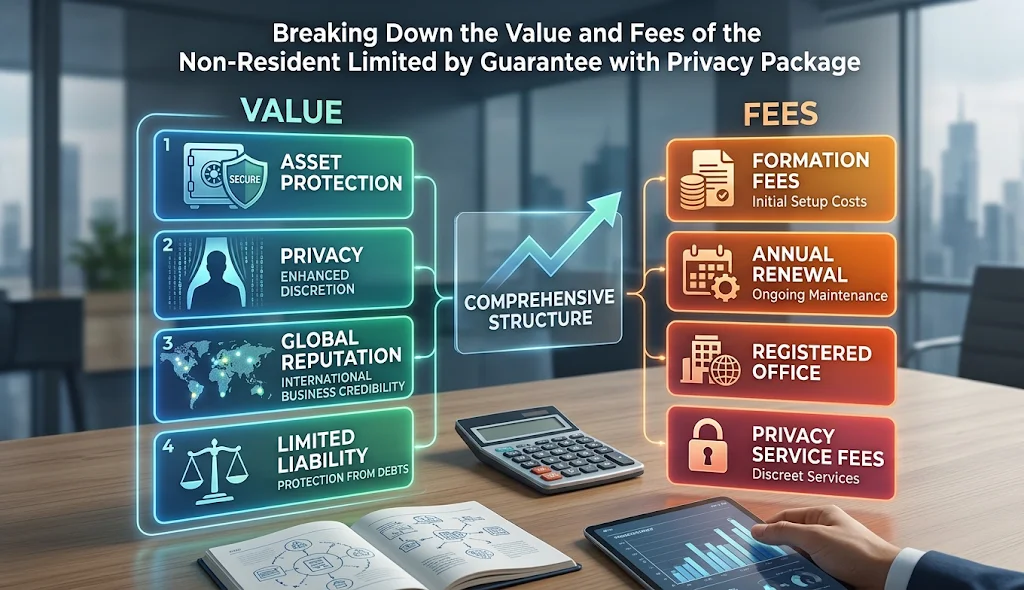
If corporate details require modification, directors update the information using specific statutory forms alongside the confirmation statement. Late submissions risk legal prosecution or corporate dissolution. Overseas businesses streamline these filing workflows by utilising a Non-Resident Limited by Guarantee with Privacy Package, ensuring regulatory filings proceed without administrative delays or public address exposure.
How Can You Manage a UK Registered Office Address From Abroad?
You manage a UK registered office address from abroad by contracting a professional corporate service provider, using their physical UK location for official mail receipt, and scanning regulatory correspondence for immediate digital transmission to your international dashboard.
UK company law requires every registered entity to maintain an official physical address situated in England, Wales, Scotland, or Northern Ireland. Public institutions including Companies House, HM Revenue and Customs, and the Courts Service deliver legal notices and statutory communications exclusively to this physical address. Post office boxes are legally invalid unless paired with a full physical street address.
International directors cannot use overseas residential addresses as the registered office of a UK company. Service providers supply official UK street addresses to receive official mail on behalf of international clients. Professional mail handlers filter corporate mail, eliminate commercial junk, and digitise official correspondence.
Scanned documents arrive in secure online portals within hours of physical delivery. Digital delivery ensures overseas directors review urgent statutory notices, tax demands, and legal documents in real time. Maintaining a dedicated service address protects the private residential addresses of international directors from public registry databases.
How Do You Update Persons with Significant Control Registers Remotely?
You update Persons with Significant Control registers remotely by recording beneficial ownership changes in your internal statutory logs within 14 days and submitting the statutory filing online to Companies House within 28 days of the modification.
UK corporate regulations demand total transparency regarding ultimate beneficial owners. A Person with Significant Control holds significant influence over corporate governance, possesses voting rights exceeding 25 per cent, or controls the appointment of board members. Overseas entities must continuously monitor internal ownership adjustments to remain fully compliant.
When share capital shifts or voting rights are redistributed, the company must update its internal PSC register within 14 days. The director confirms personal identification details, legal name, service address, nationality, country of residence, and date of notice acquisition. The internal register reflects exact percentage brackets of share ownership and voting control.
After updating internal records, the director submits the electronic notification to Companies House within 28 days. Public registries display updated ownership information, maintaining transparency for financial institutions and regulatory authorities. Understanding governance structures helps non-resident owners, as detailed in our guide on The Role of Directors, Guarantors, and PSCs in an Overseas-Led Guarantee Company, manage corporate responsibility across international borders.
What Are the Rules for Storing UK Company Accounting Records Overseas?
UK company accounting records stored overseas must be kept digitally for six years, remain accessible for UK regulatory inspection, and include receipts, invoices, bank statements, payroll logs, and order details written in English.
Section 386 of the Companies Act 2006 obliges every UK company to keep adequate accounting records. These records must reveal the financial position of the company with reasonable accuracy at any given moment. International operations must track daily financial movements, asset acquisitions, sales income, and operational expenditures through robust digital accounting software.
Overseas directors must maintain invoices, purchase receipts, credit notes, payment vouchers, and bank statements. Electronic storage systems must preserve document integrity and guarantee immediate retrieval upon request by HM Revenue and Customs. Accounting entries must convert foreign currency transactions into British Pounds using official spot rates at the transaction date.
Financial records must remain stored for a minimum period of six years from the end of the relevant accounting period. If accounting records sit physically outside the United Kingdom, financial summaries must be sent to the UK periodically. Digital cloud accounting software satisfies this legal requirement by providing instantaneous access to real-time financial statements from any location worldwide.
How Do International Directors Access Their Web Filing Authentication Code?
International directors access their Web Filing Authentication Code online through their company summary page upon submitting complete, accurate information and completing all required legal identity checks through established compliance frameworks.
The Web Filing Authentication Code acts as the legal digital signature for a UK company at Companies House. This six-character alphanumeric code authorises online submission of official documents, confirmation statements, director changes, and address updates. Securing this code prevents unauthorised corporate filings and fraudulent registry modifications.
During corporate setup, founders submit incorporation data electronically. Once Companies House processes the application, the system generates the authentication code automatically. Directors view this security credential within their digital portal control panel. Storing this code securely prevents unauthorised third parties from modifying company registers.
If an authentication code is lost, directors request an online code reissue through their company management panel. The system displays the code directly on the secure dashboard once identity checks are cleared. Fast administration tools enable international business leaders to complete legal updates rapidly, as highlighted in our evaluation of Fast-Tracking Your International Non-Profit With the Non-Resident Limited by Guarantee with Privacy Package for international operations.
How Do You Ensure Remote Compliance With HMRC Corporation Tax Rules?
You ensure remote compliance with HMRC rules by registering for Corporation Tax within three months of starting business activities, filing annual Company Tax Returns online using CT600 forms, and submitting micro-entity or statutory accounts digitally.
Overseas entities operating a UK limited company fall under UK Corporation Tax liability. International directors must register the business entity with HM Revenue and Customs within 90 days of initiating commercial operations. Commercial activities include selling goods, rendering services, renting property, employing staff, or managing investment portfolios.
HMRC assigns a 10-digit Unique Taxpayer Reference to the corporate entity upon registration. International directors use this tax identifier to access the HMRC online services portal. The business must prepare annual statutory accounts following UK Generally Accepted Accounting Practice standards or International Financial Reporting Standards.
The company submits its annual Company Tax Return using Form CT600 alongside tagged iXBRL financial accounts. The statutory deadline for tax submission is 12 months after the accounting period ends. However, Corporation Tax payments must be settled nine months and one day after the accounting year-end. Digital banking services allow international directors to settle UK tax liabilities electronically from foreign business accounts.



0 comments
No comments yet — be the first to share your thoughts.