
Why Is Time Zone a Problem When Running a UK Company From Abroad?
Running a UK company from abroad can create time zone challenges that affect communication, meetings, banking, and daily operations. Discover practical ways to manage schedules, stay compliant, and keep your business running smoothly.
Time zone is a problem because UK authorities, banks, and service teams operate on UK business hours, while overseas owners work in different time zones. Gaps of 4 to 11 hours delay replies, approvals, and filings, which slows decisions and increases the risk of missed deadlines.
What Causes Time Zone Gaps for Non-Resident UK Company Owners?
A UK company runs on Greenwich Mean Time (UTC+0) in winter and British Summer Time (UTC+1) in summer. Owners abroad live on a different offset, so UK office hours and their working hours overlap for only part of the day.
UK clocks move forward one hour on the last Sunday of March. They move back one hour on the last Sunday of October. If your country does not observe daylight saving, the gap between you and the UK changes by one hour twice a year.
The gap depends on your location. Three examples: Dubai (UTC+4) sits 4 hours ahead of UK winter time, Singapore (UTC+8) sits 8 hours ahead, and New York (UTC-5) sits 5 hours behind. Each gap shifts by one hour for part of the year.
A standard UK working day runs from 9:00 to 17:00, which equals 8 hours. For a Singapore-based owner, that window covers 17:00 to 01:00 local time in winter. The UK working day starts as the owner’s day ends.
The offset affects every UK-facing task. Filings, bank queries, and adviser requests all follow UK working hours. The wider the gap, the fewer live hours you share with UK teams.
How Does Time Zone Affect UK Company Formation Speed?
Time zone does not slow the formation itself. A UK company forms online in as little as 3 working hours when information is complete and accurate, and all legal and ID checks are cleared. Time zone affects only how fast you resolve queries.
Processing times depend on Companies House processing. They count working days only. Weekends and bank holidays add no processing time. England and Wales observe 8 bank holidays each year, and each one pauses processing.
Delays occur when information or documents are incomplete or incorrect. Technical or application-related complexities also require additional processing. Three common causes: missing passport details, mismatched director names, and incomplete residential addresses. Each cause triggers a query that you resolve before processing continues.
The reply window matters once a query arrives. A reply sent after the UK working day ends waits until the next UK working day. A one-hour correction can stretch across a full working day.
Prepare three items before submission: passport details, residential address, and director and shareholder information. Complete submissions remove the query cycle entirely. Once incorporation completes, your Web Filing Authentication Code appears online through your company summary page. You can access it at any hour, in any time zone.
Which UK Compliance Tasks Depend on UK Deadlines?
Annual accounts, the confirmation statement, and the Corporation Tax return follow fixed UK deadlines. Deadlines use UK calendar dates, not the owner’s local dates, so you plan each filing against UK time, not local time.
A UK limited company carries three recurring obligations. The confirmation statement is filed at least once every 12 months. Private company accounts are due 9 months after the financial year end. The Corporation Tax return is due 12 months after the accounting period ends.
Companies House and HMRC issue notices and process filings on UK working days. If your offset exceeds 8 hours, those notices reach you during your night or early morning. A notice read a day late shortens your preparation window.
Plan sign-off with the offset in mind. If a deadline falls within 14 days, schedule document sign-off at least 5 UK working days earlier. Early sign-off absorbs query cycles and verification steps.
Late filing triggers penalties from Companies House and HMRC. Time zone gaps add no extension to any statutory deadline. The UK date governs every filing.
How Do Time Zone Gaps Affect Support and Communication?
Gaps shrink the hours in which you reach UK support teams, banks, and advisers. Replies arrive outside your working day, so a morning question often receives an answer the next day. Support coverage determines how fast you resolve issues.
Three channels depend on UK hours: email support, bank queries, and accountant requests. UK teams respond between 9:00 and 17:00 UK time. For a New York owner, that window runs from 04:00 to 12:00 local time in winter. The overlap ends at noon.
Overlap hours differ by region. Dubai owners overlap with UK teams from 13:00 to 21:00 in winter. Singapore owners overlap from 17:00 to 01:00. Narrow or late overlap windows limit live conversations and push most exchanges into email.
Each email round trip spans two time zones and one overnight gap. Approvals, document requests, and clarifications queue behind that gap. Five exchanges on one issue consume five UK working days when each reply lands after hours.
Support model matters. Round-the-clock coverage removes dependence on overlap hours. UK office-hours coverage ties every response to the UK schedule. Evaluate both models in this comparison of 24/7 support vs UK office-hours support for overseas company owners.
How Does Non-Resident Basic Setup Reduce Time Zone Friction?
Non-Resident Basic Setup gives non-UK residents an online route to incorporation. Submission, identity checks, and document delivery run online, so you start each stage from your own location at any hour.
Online incorporation removes in-person visits and appointment calls. You submit details when your day allows. Formation completes in as little as 3 working hours once information is complete and legal and ID checks clear. Your Web Filing Authentication Code then appears on your company summary page.
Non-resident clients form their UK company online with Non-Resident Basic Setup, a package built for non-UK residents. The structure matches the requirements overseas owners face. Each stage follows a defined sequence, which limits back-and-forth queries across time zones.
Accurate submission is the strongest control against delay. Verify passport details, validate your residential address, and confirm director and shareholder information before you submit. A complete first submission removes the reply cycle that time zones lengthen.
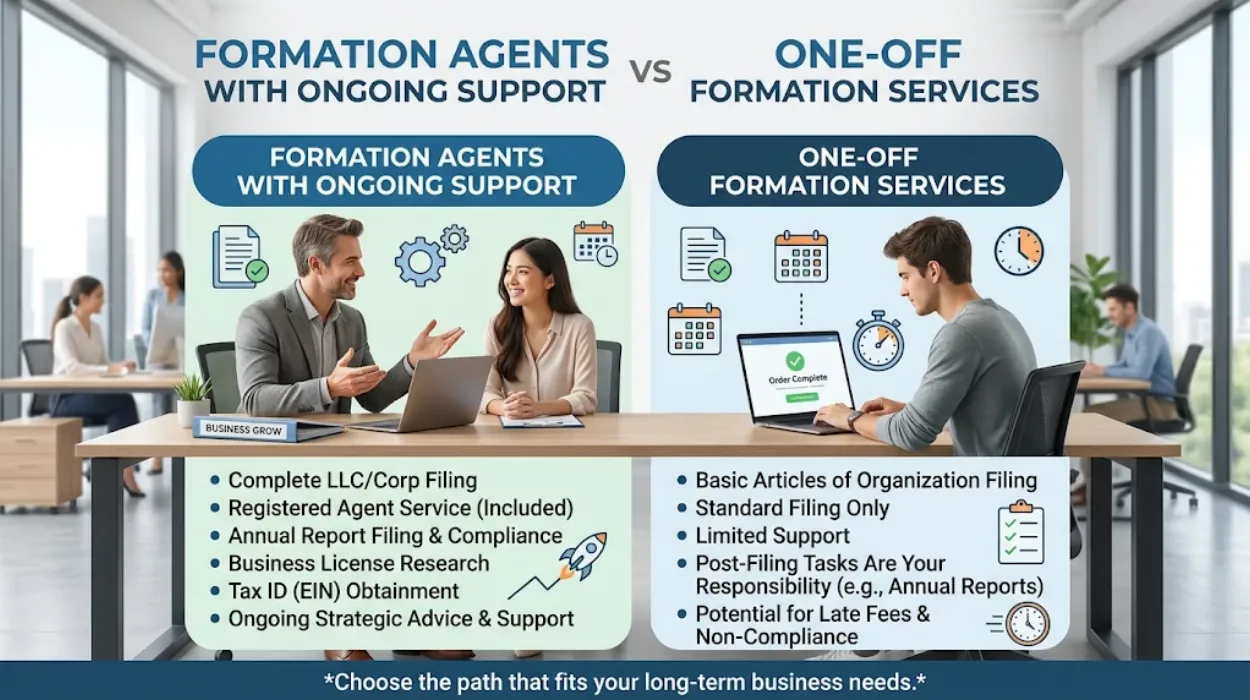
Post-incorporation business support services cover ongoing company administration. Annual filings, deadline tracking, and document requests continue after formation. Support structure then governs how quickly you resolve each request.
What Is the Bottom Line for Overseas UK Company Owners?
Time zone gaps of 4 to 11 hours affect replies, queries, and deadline planning, not formation itself. Submit complete information, plan around UK working days, and choose support that matches your working hours.
Three actions reduce time zone friction: submit accurate information the first time, schedule sign-off 5 UK working days before deadlines, and select a support model with coverage that fits your offset. Each action targets a specific delay point in the formation and compliance cycle.
Non-Resident UK Company Formation provides UK company formation and business support services exclusively for non-UK residents. Owners register their UK company through Non-Resident Basic Setup and complete formation online in as little as 3 working hours. The service structure removes appointment dependence and gives overseas owners direct access to their Web Filing Authentication Code.



0 comments
No comments yet — be the first to share your thoughts.