
What Do You Do When Your Chosen UK Company Name Fails the Initial Availability Check?
Discover what to do when your preferred UK company name fails the initial availability check. Explore alternative names, Companies House rules and practical steps to secure an acceptable business name.
A name fails the check when it matches or closely resembles an existing register entry, contains a restricted word, or breaches naming rules. Search the Companies House register, remove the conflict by adjusting or adding distinguishing words, and resubmit the application with the revised name.
A failed availability check stops the incorporation application at the first stage. Companies House compares every proposed name against more than 5 million entries on the register. The rejection reason tells you exactly which rule your name breached. Read it first, then act on that specific reason.
Why Does a UK Company Name Fail the Initial Availability Check?
UK company names fail when they match an existing registered name, include a sensitive word without approval, imply a false connection, or contain prohibited characters. Companies House applies these rules under the Companies Act 2006 to protect the public register from confusion.
Four grounds cause most rejections. The first is the "same as" rule. Companies House treats two names as identical after removing case, spacing, punctuation, and endings such as "Limited" or "Ltd". It also disregards common words such as "The", "Group", "International", and "UK" during comparison.
The second ground is sensitive words. Terms such as "Bank", "Royal", "Chartered", and "Insurance" require approval from the relevant government body or regulator before registration. The third ground is offensive or misleading wording. A name that implies a government connection or a regulated activity you do not hold fails.
The fourth ground is formatting. A private limited company name ends with "Limited" or "Ltd". The name stays within 160 characters and uses only permitted letters, numbers, and punctuation.
How Do You Check Name Availability Before You Resubmit?
Search the Companies House register using the exact name, then test variations with and without suffixes. Review results for identical and near-identical entries. Verify sensitive words against government guidance before submitting the application again.
Run three searches. Search the exact name, the name without "Limited", and the name with an alternative spelling. Each search surfaces a different conflict. Review active and recently dissolved entries, and note any name that reads or sounds like yours.
Companies House does not check trademarks. A name that passes the register check still conflicts with a registered trademark. Search the UK Intellectual Property Office trademark database separately. The Company Names Adjudicator orders changes where a name was registered opportunistically or infringes an existing trade mark.
Record the result of each search. This record shows which alternatives clear both checks before you resubmit.
What Changes Make a Rejected Name Acceptable?
Add a distinguishing word, change the core term, or coin a new name. Adding a plural, a punctuation mark, or a disregarded word such as "UK" alone does not distinguish a name, because Companies House ignores those elements.
Three adjustments work. First, replace the core word that conflicts. A name built on a different central term reads as a different name. Second, add a distinctive descriptive word that sets the name apart, such as a location or product term that does not appear in the comparison list.
Third, coin a new word. Invented names rarely match existing entries and produce stronger trademark positions. Test each alternative against the register and the trademark database before choosing.
Avoid cosmetic edits. Swapping "and" for "&" or adding a hyphen changes nothing. The comparison process strips those elements, so the revised name fails again.
How Does a Failed Name Check Affect the Three-Hour Formation Timeline?
A failed name check pauses the application until you submit a compliant name. Formation takes as little as 3 working hours when information is complete and accurate, so resolving name conflicts before submission protects that timeline.
The 3-working-hour timeline applies to complete, accurate submissions. It also requires you to complete all legal and ID checks. Companies House then issues your Web Filing Authentication Code, which appears online on your company summary page.
Processing times depend on Companies House and exclude weekends and bank holidays. Delays occur where information or documents are incomplete or incorrect. Technical or application-related complexities add further processing time.
A rejected name is an incorrect input. Processing resumes only after you resubmit a compliant name. Complete your registration and trademark searches first. This removes the most common cause of a stalled application.
Can You Incorporate Under an Alternative Name and Change It Later?
Yes. Incorporate with a compliant interim name, then file a name change once your preferred name clears the checks. The Non-Resident Company Name Change service covers the amendment filing for companies with non-UK resident directors and shareholders.
An interim name keeps the incorporation moving. Your company exists from the date on the certificate of incorporation. You then pursue the preferred name through a formal change. Directors based abroad complete this process online, so you can change your registered company name as a non-resident without travelling to the UK.
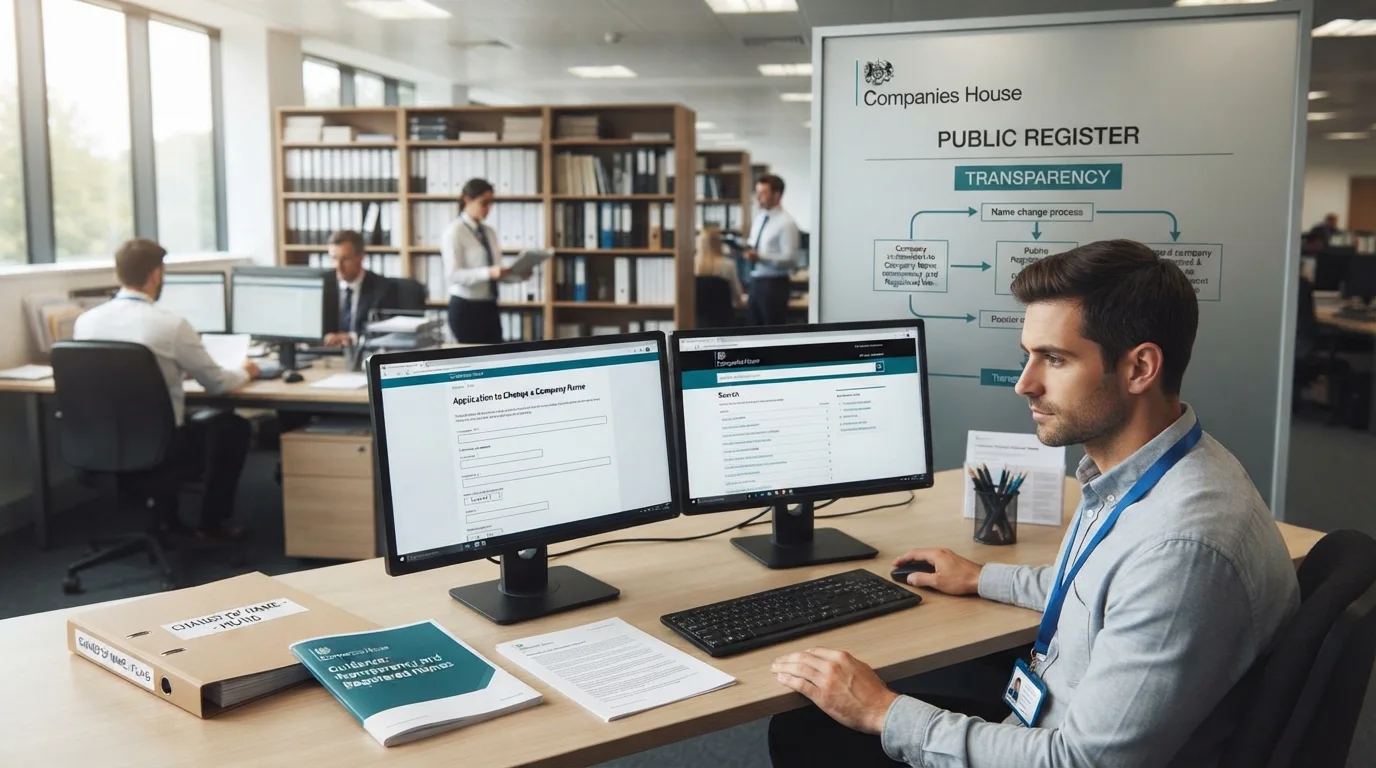
A name change updates the public record. The old name remains visible in the company's filing history. Read how changing your registered UK company name affects public register transparency before you commit to a two-step route.
Companies House also holds a power under section 67 of the Companies Act 2006. It directs a company to change a name that is too similar to an existing one, within 12 months of registration. Choose an interim name that clears the "same as" comparison with margin.
What Does the Name Change Filing Process Involve?
Pass a special resolution with 75% approval, file the change with Companies House, and receive a certificate of incorporation on change of name. The new name takes effect on the certificate date, not the filing date.
The process runs in three steps. Members pass a special resolution, which requires 75% of votes cast, or follow another method set out in the articles of association. The company then submits the change to Companies House online and files a copy of the resolution within 15 days.
Companies House reviews the new name against the same rules that apply at incorporation. It issues a certificate of incorporation on change of name once it accepts the filing. The register updates from that certificate date.
Update records after the certificate arrives. Amend the name with your bank, with HMRC, and in your statutory registers. Display the new name at the registered office and on business letters and websites. Then align your registered office and service address records after the name change so every public record matches.
What Is the Takeaway on Failed Name Checks?
A failed name check is a correctable input error. Identify the rejection ground, search the register and trademark database, adjust the name, and resubmit. Where the preferred name is unavailable, incorporate an interim name and file a change.
Name failures trace to four rules: identical names, sensitive words, misleading wording, and formatting limits. Each has a defined fix. Verified searches before resubmission protect the 3-working-hour formation window for accurate, complete applications.
Non-Resident UK Company Formation supports international founders through this sequence. Its Non-Resident Company Name Change service files the amendment once your preferred name clears Companies House checks.


0 comments
No comments yet — be the first to share your thoughts.