
Do International Trademark Conflicts Affect Your Companies House Name Registration?
Understand how international trademark conflicts can affect your Companies House name registration. Explore UK company naming rules, trademark protections and steps to avoid costly legal disputes.
International trademark conflicts do not automatically block Companies House name registrations because UK company law operates independently of global trademark registries. Companies House checks availability against existing UK corporate names on the public register rather than verifying international intellectual property databases.
When entrepreneurs register a limited company in the United Kingdom, they often wonder how global intellectual property rights intersect with domestic corporate formation rules. Companies House acts as the executive agency responsible for incorporating and dissolving companies in the UK. The statutory examination process focuses strictly on whether a proposed company name is identical to or too similar to an existing entry on the register of companies. International trademark holders must enforce their intellectual property rights independently through legal channels, trademark tribunals, or the courts. Companies House examiners do not perform global trademark searches during incorporation.
Entrepreneurs from overseas can complete their company registration online in as little as 3 working hours when complete and accurate information is submitted. This rapid timeline requires all necessary legal and identity checks to be completed successfully. The official Web Filing Authentication Code will be provided online through your company summary page. Processing times depend strictly on Companies House processing schedules and exclude weekends and bank holidays. Delays occur where information or documents are incomplete or incorrect, or where technical application-related complexities require additional manual processing.
How Does Companies House Evaluate Corporate Names During Incorporation?
Companies House evaluates corporate names by comparing the exact text against the existing index of registered UK companies and restricted words lists.
Examiners review applications using automated and manual screening protocols to prevent public confusion over corporate identities. Two names are considered identical if they differ only by punctuation, special characters, or standard business suffixes like Limited or PLC. Specific restricted words require government approval, ministerial consent, or professional body clearance before registration. For example, three regulated terms requiring authorisation include insurance, university, and architect. Applicants must provide supporting documentation when incorporating companies that feature sensitive sector descriptors.
Registrar officials assess phonetic similarities and visual matching criteria to maintain corporate transparency across the jurisdiction. When an applicant submits a name that creates misleading impressions regarding royal patronage or government affiliation, examiners reject the application immediately. Business founders must verify registration availability independently before submitting official incorporation forms to avoid unnecessary processing delays. Companies House maintains a strict policy against reserving company names prior to formal application submission.
Can Global Intellectual Property Holders Challenge a UK Company Name?
Global intellectual property holders can challenge a UK company name by filing an official objection with the Company Names Tribunal.
Intellectual property owners utilise administrative procedures to object to company names registered with malicious intent or unfair advantage. The Company Names Tribunal operates under the Intellectual Property Office to adjudicate disputes involving opportunistic name registrations. Three common grounds for objection include opportunistic registration, trading on established goodwill, and misleading consumers regarding corporate affiliation. When a tribunal rules in favour of the trademark holder, the offending company must change its registered name within strict statutory timeframes.
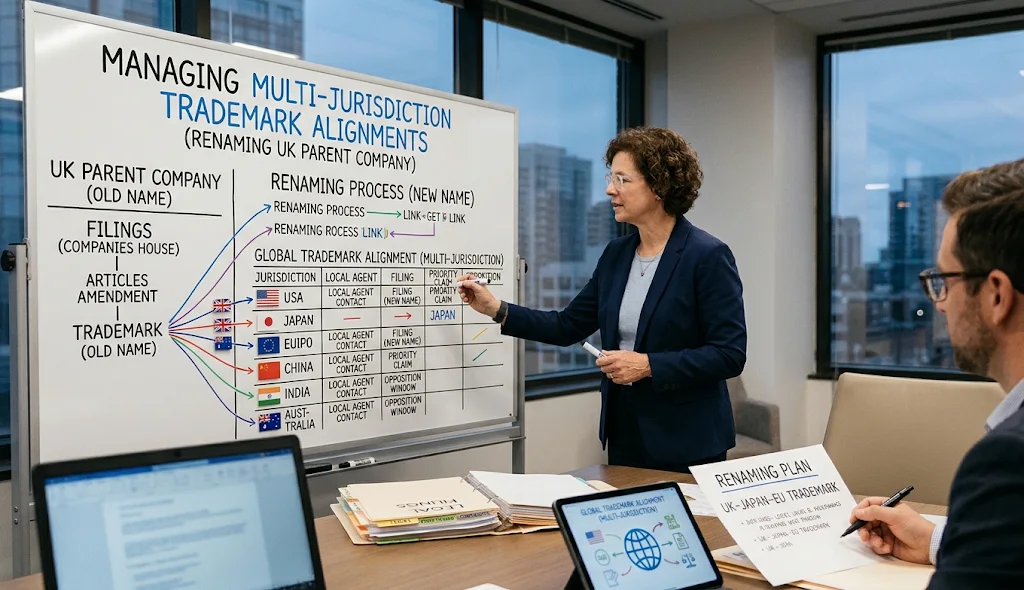
Directors face mandatory administrative compliance orders if they ignore tribunal rulings or fail to adopt alternative corporate identifiers. Companies requiring a designation adjustment can utilise a professional Non-Resident Company Name Change to update their official corporate identity efficiently. Brand protection strategies require international businesses to monitor global registries and domestic filing platforms simultaneously. Proactive legal monitoring prevents unauthorised entities from exploiting established brand equity within the UK market.
What Steps Prevent Trademark Infringement Disputes Across Jurisdictions?
Preventing cross-border trademark disputes requires conducting comprehensive searches across both UK corporate registries and international trademark databases.
Founders must analyse existing intellectual property holdings before finalising their corporate naming strategy for foreign markets. Four essential pre-registration tasks include searching the UK trademark register, checking global intellectual property databases, reviewing existing domain name availability, and analysing active social media handles. Thorough research mitigates the risk of costly rebranding initiatives and legal liabilities following incorporation. Businesses operating globally must align their corporate legal name with their primary commercial trademark assets to ensure seamless operational continuity.
International entrepreneurs must evaluate regional trademark classes that correspond directly with their intended commercial activities. When a foreign entity registers a UK limited company, directors must ensure their trading name respects domestic consumer protection laws. Strategic brand planning safeguards corporate reputation and reduces the likelihood of formal opposition proceedings from established market competitors. Careful due diligence during the initial planning phase establishes a secure foundation for long-term international expansion.
Why Do Official Certificate Modifications Matter for Corporate Verification?
Official certificate modifications matter for corporate verification because financial institutions and regulatory bodies demand authenticated proof of current legal identity.
Global verification procedures require updated documentation whenever a registered corporate entity alters its primary operating title. Three critical verification entities requiring updated documents include commercial banking partners, tax authorities, and international payment processors. When businesses update their corporate identifiers, they must understand Why Official Certificates of Incorporation on Change of Name Matter for Global Verification to maintain compliance. Official documentation authenticates corporate transitions and satisfies rigorous Know Your Customer compliance frameworks implemented by global financial institutions.
Regulatory compliance mandates that corporate records remain accurate across all operational jurisdictions and banking networks. When businesses fail to update their certificates promptly, compliance officers freeze accounts or suspend transaction processing capabilities. Clear audit trails protect international enterprises from accusations of fraudulent activity or unauthorised corporate representation. Maintaining pristine statutory records ensures uninterrupted access to global banking services and international trade networks.



0 comments
No comments yet — be the first to share your thoughts.