
What Happens When an Overseas Founder Loses Their UK Certificate of Incorporation?
Lost your UK Certificate of Incorporation as an overseas founder? Learn how to obtain a replacement, restore essential company records and maintain smooth business operations without unnecessary delays.
Losing a UK Certificate of Incorporation prevents an overseas founder from verifying corporate existence, opening international bank accounts, or completing legal due diligence. Founders must obtain an official replacement document from Companies House to restore complete corporate validation.
Why Is the Certificate of Incorporation Essential for Non-UK Residents?
The Certificate of Incorporation serves as the official legal proof that a UK company exists as a distinct corporate entity under the Companies Act 2006. Overseas authorities, banking institutions, and payment processors require this document to verify legal registration.
The Certificate of Incorporation acts as the birth certificate of a UK private limited company. When an overseas entrepreneur registers a company in the United Kingdom, Companies House issues this official document upon successful incorporation. The certificate contains critical legal details, including the full legal company name, the unique company registration number, the exact date of incorporation, and the jurisdiction under which the company operates.
International operations depend entirely on valid legal verification. Banking institutions outside the UK demand this document during business account onboarding. Payment gateways require valid corporate proof before processing international transactions. Tax authorities, foreign governments, legal representatives, and potential investors mandate the presentation of an official certificate before executing commercial contracts or cross-border agreements.
Without access to this founding document, non-resident directors face severe administrative friction. Financial institutions suspend pending account applications when corporate details cannot be verified. Foreign regulatory bodies halt licensing procedures until official proof of status is provided. Preserving access to an authentic certificate remains a core requirement for ongoing international corporate administration.
How Does Misplacing the Certificate Impact Daily Business Operations?
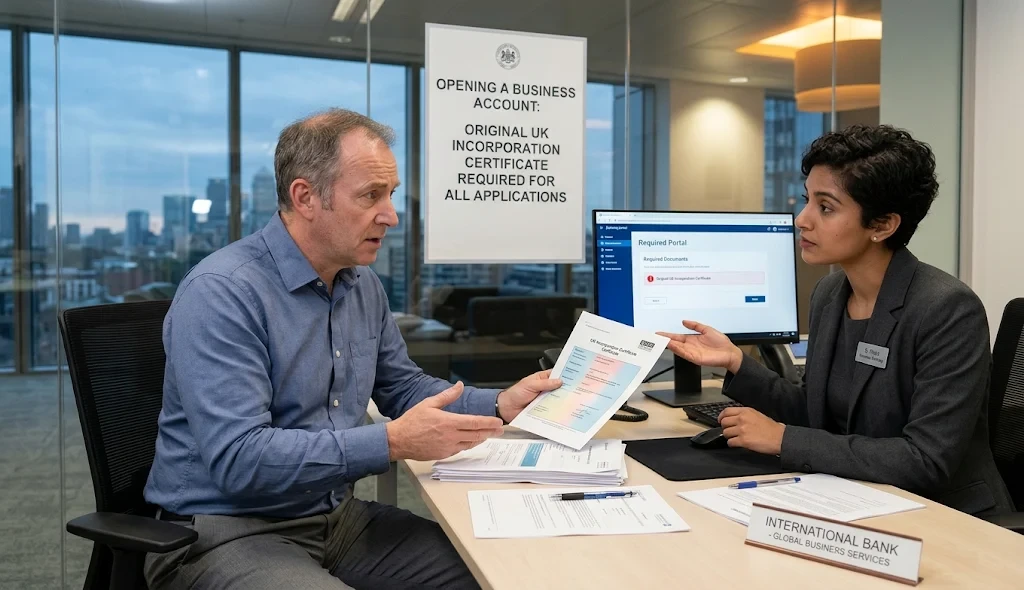
Losing the original certificate halts international banking applications, delays corporate contract executions, blocks merchant processing setup, and complicates foreign tax compliance. Operations remain restricted until a validated replacement is presented.
Daily operational delays occur immediately after losing access to corporate documentation. International banks enforce strict Know Your Customer protocols for overseas business accounts. Account officers demand certified proof of company formation before initiating background checks. Misplacing the certificate stalls application procedures and prevents cross-border treasury management.
Foreign commercial contracts require verified entity status before execution. Enterprise clients insist on verifying corporate details against official registry documents. Losing the certificate prevents legal teams from validating corporate authority, leading to delayed contract signatures and lost commercial opportunities worldwide.
Payment processors and merchant gateways require legal proof during identity verification checks. Merchant onboarding procedures freeze when an overseas founder fails to upload an authentic certificate. Acquiring bank accounts remains inaccessible, stopping revenue collection across international digital storefronts until proper legal paperwork is filed.
Tax authorities outside the United Kingdom require proof of corporate status for international tax filings and double taxation treaty applications. Foreign tax agencies reject unverified corporate filings without official registry evidence. Directors risk non-compliance fines and local regulatory penalties when legal paperwork is unavailable during compliance audits.
What Steps Should Overseas Directors Take to Retrieve Their Document?
Overseas directors must access the official Companies House registry online or submit an application for an official physical printed document. Electronic downloads provide immediate digital reference, while certified paper copies satisfy strict foreign legal standards.
Retrieving a lost document requires clear administrative action through official United Kingdom channels. Non-resident founders must determine whether a digital copy or an official printed certificate is necessary for their specific administrative purpose. Companies House maintains digital records of all incorporated entities within the UK jurisdiction.
Digital retrieval provides a rapid solution for basic corporate record-keeping. Directors can access the public Companies House service to review basic company information and download digital public records. Electronic files satisfy general operational reviews and internal administrative requirements.
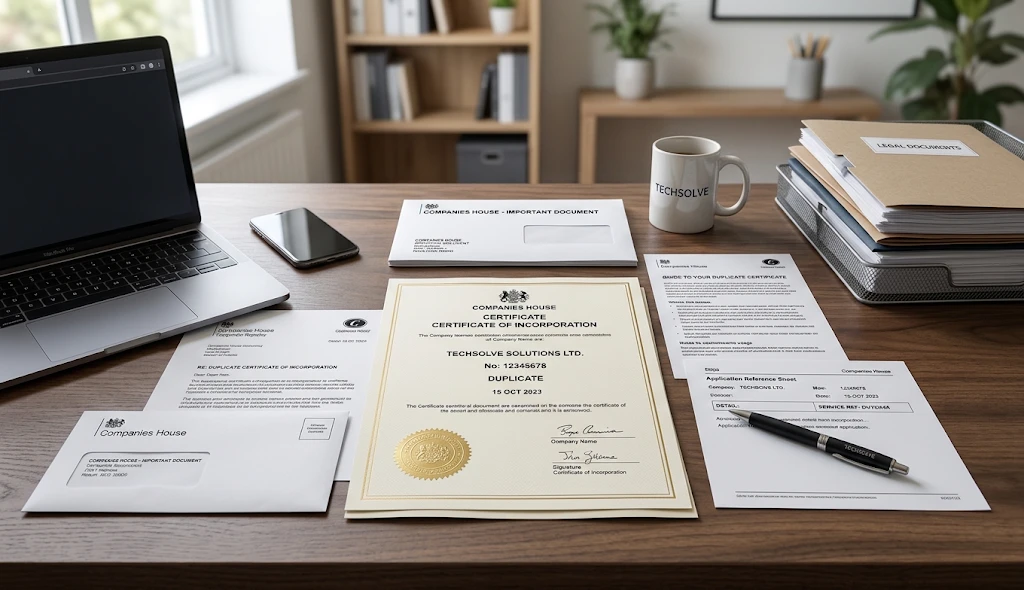
Official legal procedures outside the UK require physical documentation printed directly by the registrar. Overseas banks, embassies, and legal authorities reject standard home-printed digital files. Directors must order a Duplicate Certificate of Incorporation to obtain an officially printed document suitable for legal validation.
When ordering through standard registry portals, processing times depend on Companies House processing and exclude weekends and bank holidays. A company can be formed online in as little as 3 working hours when complete and accurate information is submitted, and all necessary legal and ID checks are completed. Delays can occur where information or documents are incomplete or incorrect, or where technical or application-related complexities require additional processing.
How Do Digital Download Copies Compare to Official Printed Copies?
Digital downloads serve basic internal record-keeping and basic digital verifications. Official printed physical copies feature legal registry paper, official embossing, and legal validity required by international institutions.
Understanding document formats prevents administrative rejections in foreign jurisdictions. A downloaded digital file contains public filing details viewable on standard computer screens. Digital copies work effectively for preliminary discussions, internal record management, and basic software verification.
Foreign government agencies require higher standards of document authentication. Overseas courts, foreign banks, and international land registries demand physical documents printed by the official registrar. Official printed copies carry legal weight because Companies House prints them on specialised paper stock containing official security features.
International legal transactions often require additional certification beyond standard printing. Foreign authorities frequently mandate an Apostille certificate under the Hague Convention to validate the registrar's signature. Official printed certificates provide the necessary physical substrate required for apostille legalisation and embassy attestation.
Non-resident directors must review Comparing Ordinary Photocopies vs. Official Printed Legal Copies for Overseas Authorities to evaluate legal formatting compliance. Selecting the incorrect document format leads to rejected visa applications, blocked corporate bank accounts, and costly legal delays across foreign jurisdictions.
What Is the Role of the Web Filing Authentication Code in Document Retrieval?
The Web Filing Authentication Code is a six-digit alphanumeric code that authorises online management of UK company records. It allows directors to submit official filings and update corporate details securely.
The Web Filing Authentication Code functions as an official digital signature for UK company management. Companies House issues this unique code to secure online filing portals against unauthorised corporate alterations. Directors use the authentication code to submit annual confirmation statements, record director changes, and update registered office details.
Your Web Filing Authentication Code will be provided online through your company summary page. Overseas founders must safeguard this credential to maintain complete administrative control over their UK corporate profile. Without this code, online registry updates require lengthier postal verification procedures.
Retrieving corporate documents or modifying company records online requires active authentication code access. When non-resident directors lose both their authentication code and legal certificates, corporate administration halts completely. Re-issuing authentication codes via post to overseas addresses introduces significant administrative delays.
Maintaining secure digital records of all corporate credentials ensures seamless operational continuity. Overseas entrepreneurs must store authentication codes alongside company formation documents in encrypted digital vaults. Proper credential management allows immediate authorisation during urgent legal or banking procedures.
How Can Non-Resident Founders Prevent Document Loss in the Future?
Founders should maintain secure cloud-based digital archives, store physical legal documents in fireproof storage, and partner with a dedicated UK corporate service provider for continuous administration.
Preventing corporate document loss requires proactive administrative practices designed for cross-border management. Overseas directors operate miles away from UK registry offices, making physical document retrieval logistically complex. Implementing structured record management safeguards business continuity.
Digital redundancy forms the first line of defence against record loss. Founders must create secure, encrypted digital repositories accessible to authorised corporate officers. Scanning all physical legal documents immediately upon receipt creates instant backup files for routine daily operations.
Physical certificates demand secure, controlled storage environments. Original legal paperwork, embossed certificates, and notarised filings should remain stored in secure, fireproof safes. Limiting physical document handling prevents accidental misplacement, liquid damage, or physical degradation over time.
Engaging a specialised company formation agent provides long-term administrative protection. Professional service providers maintain historic records of corporate filings, assist with registry compliance, and expedite document retrieval when originals are lost. Structured support prevents operational interruptions and maintains continuous legal compliance.
Non-Resident UK Company Formation provides dedicated corporate administration support designed specifically for international business owners. Non-Resident UK Company Formation manages official registry communications, document retrievals, and compliance filings to ensure seamless UK corporate operations from anywhere in the world.


0 comments
No comments yet — be the first to share your thoughts.