
What Is a Director Service Address and Who Needs One?
Learn what a director service address is, why UK company directors need one, and how it protects your home address from public records while ensuring compliance with Companies House requirements.
A director service address is the official contact address listed for a company director on the public Companies House register. Official post and legal notices are delivered there. It replaces the director's home address in public records. Every UK company director must provide one.
What Is a Director Service Address?
A director service address is a contact address recorded for each director at Companies House. It receives official post and legal notices. Anyone can search and view it on the public register, which separates it from a private residential address.
Each director supplies two addresses when a UK limited company is incorporated. The first is the service address. The second is the usual residential address.
Companies House publishes the service address on the public register. Anyone can read it online, including customers, suppliers, and credit agencies. The residential address stays out of public view. Companies House holds it separately and discloses it only to specified public authorities and credit reference agencies.
The service address works as a legal point of contact. Documents delivered there count as delivered to the director. This includes statutory notices, correspondence from Companies House, and court papers.
Why Does Companies House Require a Director Service Address?
Companies House requires a service address so that official documents reach every director. The requirement comes from the Companies Act 2006. It supports corporate transparency and keeps a verifiable contact point on the public register.
The register exists to give the public reliable information about UK companies. A named director with no contact address defeats that purpose. The service address closes that gap.
The requirement also protects personal data. Before the current rules, a director's home address appeared on the public register. The service address regime separates the public contact point from the private residence.
Companies House, HMRC, and the courts all use registered contact details to serve notices. A valid service address ensures a director receives those notices on time. Missed notices create compliance problems for the company, including late filing penalties.
Who Needs a Director Service Address?
Every director of a UK limited company needs a service address. The rule covers UK residents and non-UK residents alike. A company must have at least one director who is a natural person aged 16 or over.
The obligation attaches to the director, not the nationality or residence of that director. A British citizen in London and a non-UK resident in Dubai both provide one.
Three groups of directors have the strongest reasons to use a dedicated service address:
Sole directors who work from home and want to keep their residence off the public register.
Overseas directors whose foreign home address would otherwise appear on a UK public record.
Directors who value privacy and want one stable address for correspondence.
People with significant control (PSCs) also provide a service address. Companies House records it in the same way. The register is public, so the same privacy logic applies.
Can an Overseas Director Use Their Own Address as a Service Address?
Yes. A director service address can be located anywhere in the world, provided documents can be delivered there. Overseas directors can use a foreign address. The registered office address, however, must be in the United Kingdom.
Companies House does not require a UK location for the director service address. A non-UK resident can list a home or business address abroad.
Two practical effects follow. First, the address appears on the public register in full. Second, post sent from the UK to an overseas address takes longer to arrive. Statutory notices carry deadlines, so delivery speed affects compliance.
Overseas directors who compare both routes can read about using your own address versus a UK service address as an overseas director. The comparison covers privacy, delivery speed, and administration.
How Does a Service Address Differ from a Registered Office Address?
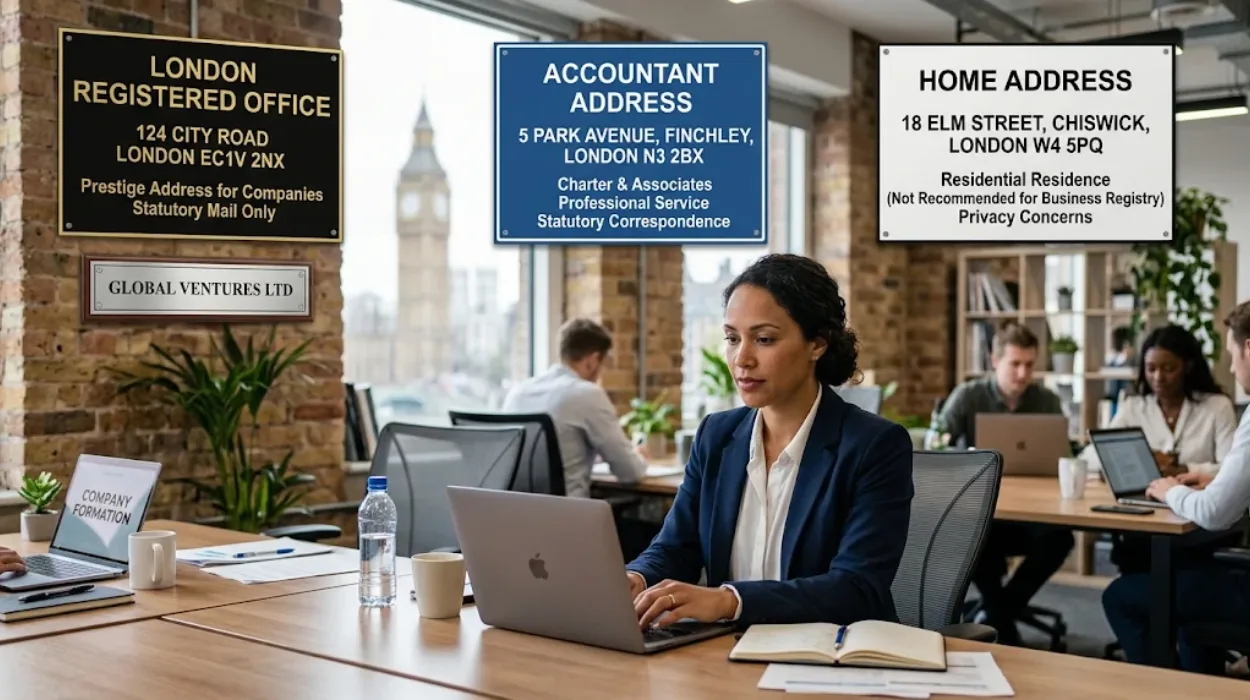
A registered office address belongs to the company. A director service address belongs to an individual director. The registered office must be a physical address in the UK. The two can match, but each serves a separate legal purpose.
The registered office is the company's official address. Companies House sends statutory correspondence there. Since 4 March 2024, it must be an appropriate address where documents can be received and acknowledged. A PO box does not qualify.
The service address attaches to one person. A company with three directors holds three service addresses on file. Each director chooses theirs independently.
Directors often set the service address equal to the registered office. This is legal and common. It keeps one address on the public register for both roles. It also keeps the director's residential address private.
How Does the Non-Resident Privacy Shield Protect Director Details?
The Non-Resident Privacy Shield provides a UK address for use on the public register. It keeps a non-UK resident director's home address off public records. Directors still file their residential address privately with Companies House.
The Non-Resident Privacy Shield addresses the exposure that overseas directors face. A foreign home address on a UK public register is searchable by anyone. A UK service address removes that exposure.
The residential address remains a legal obligation. Companies House still requires it, but holds it on a restricted record. The Non-Resident Privacy Shield places a different address on the public side.
A UK address also supports practical administration. Official post arrives in the UK, where it is received and handled. The director does not wait for international mail to deliver time-sensitive statutory notices.
How Long Does Company Formation Take with a Service Address in Place?
A UK company can be formed online in as little as three working hours. This applies when the information is complete and accurate, and all legal and ID checks are completed. Companies House processing times exclude weekends and bank holidays.
Directors supply the service address during incorporation. Supplying it correctly at the start avoids rejection and rework. An incomplete address is a common cause of delay.
Companies House processes applications within its own timeframes. Delays occur when information or documents are incomplete or incorrect. Technical or application-related complexities also add processing time.
The Web Filing Authentication Code is provided online through your company summary page. Directors use this code to file confirmation statements and annual accounts. Directors who want to set up their company with the Non-Resident Privacy Shield submit the address details with the incorporation application.
What Is the Main Takeaway About Director Service Addresses?
Every UK director must file a public service address. Overseas directors use a foreign address or a UK address. A UK service address keeps personal residence details off the public register and supports reliable document delivery.
The service address and the residential address serve different functions. One is public, and one is restricted. The registered office is a third address, and it belongs to the company.
Overseas directors choose between listing a foreign address and using a UK address. The choice affects privacy, mail delivery speed, and compliance timing.
Non-Resident UK Company Formation provides UK company formation and business support exclusively for non-UK residents. The Non-Resident Privacy Shield supplies the UK address layer for the public register. Correct address details at incorporation keep formation on its fastest timeline.



0 comments
No comments yet — be the first to share your thoughts.