
How Does the Privacy Shield Director Service Address Keep Your Home Address Private?
Protect your home address with the Privacy Shield Director Service Address from Non-Resident UK Company Formation. Maintain privacy, meet company address requirements, and manage your UK business with confidence.
The Non-Resident Privacy Shield gives overseas directors a UK service address for the public Companies House register. Your home address stays off public record. Companies House still holds your residential address privately, and official mail reaches you through the UK address.
Keeping your home address private is a legal feature of the UK register, not a workaround. A UK service address stands in for your residence on every public filing. This article explains how the arrangement works and how to put it in place for your company.
What Is a Director Service Address on the UK Register?
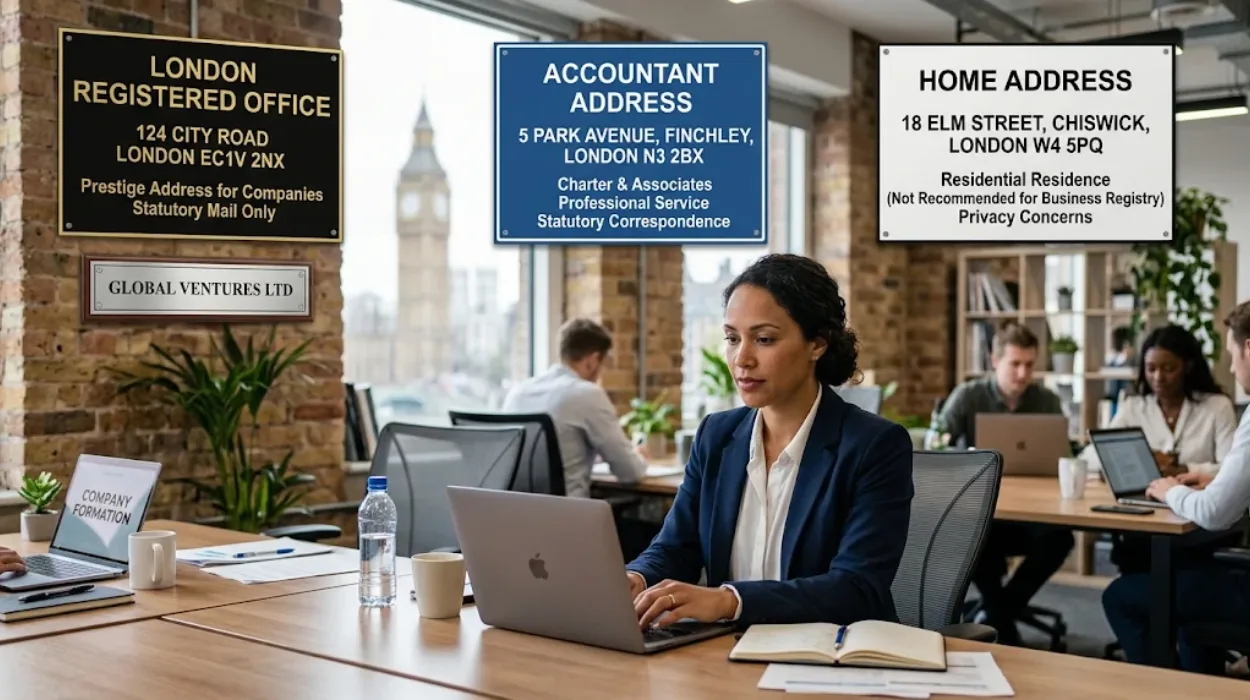
A director service address is the location where Companies House and government bodies send official documents to a director. It appears on the public register in place of the home address. The Companies Act 2006 requires every director to provide one.
The Companies Act 2006 requires two addresses for each director. The service address is public. The residential address sits on a restricted record. Companies House keeps the two records apart.
A service address receives three types of documents: Companies House notices, HMRC correspondence, and legal papers. Delivery to that address counts as proper service on the director. Directors therefore choose an address where mail arrives reliably.
Readers new to this topic can start with the basics of what a director service address is and who needs one. The guide covers the legal definition and the director types who use one.
Why Does Your Home Address Become Public Without a Service Address?
Companies House publishes every director's service address on a free, searchable register. Entering your home address as the service address places it in public view. Any internet user can read it, including marketers, data brokers, and anyone searching your name.
The register is open to all internet users at no charge. Each director record shows a name, month and year of birth, nationality, country of residence, and service address. The address field is the only location detail on the record.
Companies House retains filed records, so a published address stays visible in the filing history. Choosing the service address at incorporation prevents that exposure from the start. Correcting a published address later is far harder than selecting the right one first.
Overseas directors face one further factor. Statutory notices carry deadlines, including confirmation statements and annual accounts. International postage adds days to delivery. A UK address places the mail inside the UK postal system.
How Does a Privacy Shield Service Address Protect Your Home Address?
The service replaces your home address with a UK address on every public filing. Companies House displays the UK address only. Your residential address stays on the restricted record, which the public cannot search. Authorised public bodies retain access.
Directors who want to keep their home address private with the Non-Resident Privacy Shield supply a residential address during incorporation. Non-Resident UK Company Formation then lists the UK service address on the public record. Companies House stores your residential address separately.
The protection applies to three filings: the incorporation form (IN01), director appointments (AP01), and director detail changes (CH01). Each filing displays the UK service address. The residential address remains on the restricted record.
The structure separates two functions. The residential address tells Companies House where you live. The service address tells the public and the authorities where to send documents. Each address serves one purpose.
How Does Companies House Treat Your Residential Address?
Companies House holds your residential address on a restricted record. It discloses the address only to specified public authorities and credit reference agencies. The public register never displays it. This protection applies once you supply a separate service address.
Specified public authorities include police forces and HMRC. These bodies access the address for official functions. Members of the public searching the register cannot retrieve it.
Credit reference agencies also receive the address for identity and credit purposes. Directors who face a personal risk can apply to Companies House to restrict that disclosure. Companies House assesses each application against its published criteria.
The distinction matters for overseas directors. A residential address in another country remains on file with the registrar. Only the UK service address reaches the public register. The legal duty to disclose the residence is met in full, and the privacy of that address is preserved.
Which Address Suits an Overseas Director: Your Own or a UK Service Address?
A UK service address suits overseas directors who want privacy and fast document delivery. Your own address suits directors who accept public display of it. Three factors decide the choice: privacy, delivery speed, and compliance reliability.
Privacy comes first. Your own address appears on the public register in full. A UK service address replaces it with a separate location. The home address stays off the searchable record.
Delivery speed comes second. Companies House sends notices tied to filing deadlines, such as accounts and confirmation statements. Late accounts filing triggers automatic penalties. A UK address receives these notices inside the domestic postal network.
Directors comparing both routes can read the evaluation of your own address against a UK service address for a full breakdown. The article sets out each option against the same criteria.
Once the comparison is clear, select the service address before you submit the incorporation form. The address forms part of the filing, so the decision comes first.
How Fast Does Non-Resident UK Company Formation Set Up Your Company?
Non-Resident UK Company Formation forms a company online in as little as 3 working hours. This timeline applies when you submit complete, accurate information and all legal and ID checks are completed. Processing times exclude weekends and bank holidays.
Your company summary page provides your Web Filing Authentication Code online. The code authenticates future filings with Companies House. Keep it stored securely once it appears.
Processing times depend on Companies House. The 3 working hours count only working time. Weekends and bank holidays fall outside the calculation.
Delays occur where information or documents are incomplete or incorrect. Delays also occur where technical or application-related complexities require additional processing. Three typical examples: mismatched director names, unreadable ID scans, and incomplete address fields.
Accurate submission prevents most of these delays. Match each field to your passport before you submit. Confirm that your ID documents are clear and current. Confirm that both addresses are entered in full.
Is a Privacy Shield Service Address the Right Choice for Overseas Directors?
A privacy shield service address is the right choice for overseas directors who want a private home address and reliable UK document delivery. It separates the public record from personal residence, using the address structure the Companies Act 2006 already provides.
The UK register publishes a director's service address and protects the residential address. Using a home address as the service address removes that protection. A separate UK service address restores it and keeps official mail on a reliable route.
Non-Resident UK Company Formation delivers this solution through the Non-Resident Privacy Shield, a UK service address built for non-UK residents. The service pairs with online incorporation, so you set up the company and choose the public address in one process. The outcome is a compliant UK company with a private residential address.



0 comments
No comments yet — be the first to share your thoughts.