
Why Do Existing Customers Trust Non-Resident UK Company Formation for Replacement Paperwork?
Discover why existing customers trust Non-Residents UK Company Formation for replacement paperwork, with reliable support, efficient processing and secure access to essential company documents for ongoing business compliance.
Existing customers trust Non-Resident UK Company Formation for replacement paperwork because the company already holds their incorporation records, serves only non-UK residents, and manages duplicate requests through a structured process. Customers receive consistent document handling built around overseas company administration.
What Is a Duplicate Certificate of Incorporation?
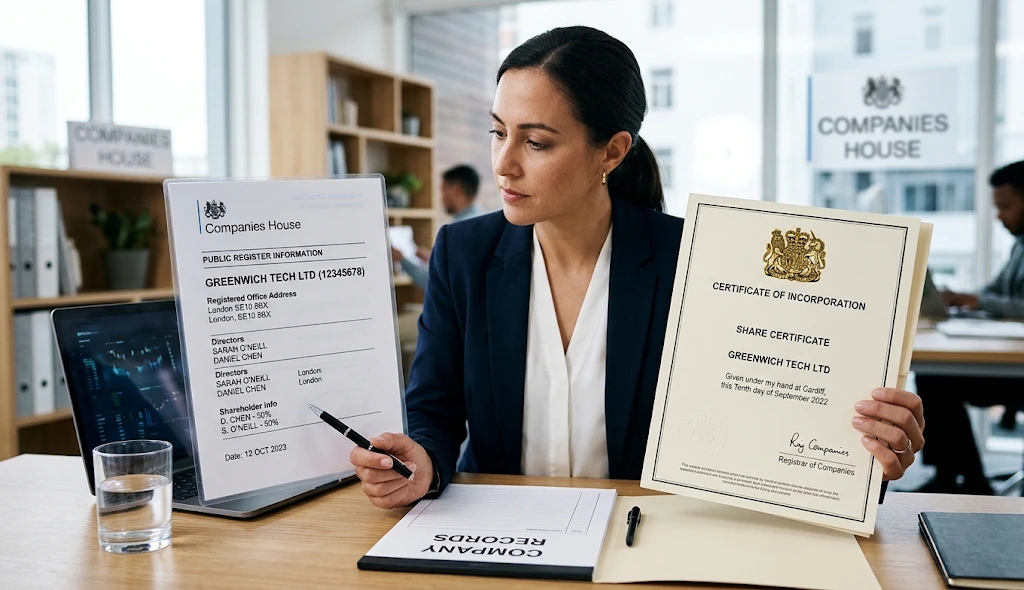
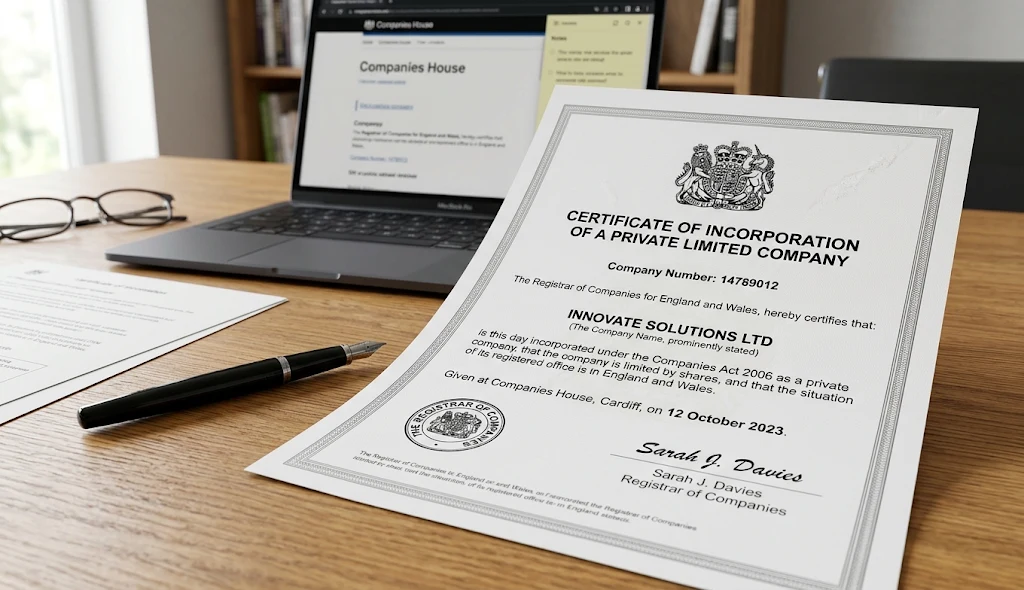
A Duplicate Certificate of Incorporation is a replacement copy of the original document issued when a UK company is registered. It confirms the company name, company number, and incorporation date, and replaces a lost, damaged, or inaccessible original.
Companies House issues the Certificate of Incorporation when it registers a limited company. The document proves the company exists as a legal entity. Banks, payment providers, and regulators ask for it during account opening and verification.
Original paper certificates travel poorly. A company owner living outside the United Kingdom holds records across several countries and storage formats. A single misplaced document delays bank applications, tender submissions, and tax registrations.
The impact reaches beyond inconvenience. Missing incorporation documents create gaps during compliance reviews. Auditors request proof of incorporation, and the absence of that proof slows the entire review. Our guide on how lost incorporation documents affect international trade and compliance audits explains these consequences in detail.
A replacement restores the evidence trail. The duplicate carries the same registered details as the original. Customers submit it to banks, auditors, and trading partners as proof of incorporation.
Why Do Existing Customers Choose Non-Resident UK Company Formation for Replacement Paperwork?
Existing customers choose Non-Resident UK Company Formation because the company already holds their formation records. Customers avoid repeating onboarding, and a provider that serves only non-UK residents understands the documentation requirements of overseas company owners.
Familiarity drives the decision. Customers formed their company through a process they already understand. The same online route that delivered their Web Filing Authentication Code through the company summary page also supports later document requests.
Specialisation drives the second reason. Non-Resident UK Company Formation works exclusively with individuals and entrepreneurs who live outside the United Kingdom. Every service reflects the requirements non-UK residents face when they set up and maintain a UK company. A general provider splits its attention across domestic and international clients. An exclusive focus removes that split.
Record continuity drives the third reason. Customers who return to the original provider work from data already captured at formation. Company name, registration details, and director information sit within the same service relationship. This reduces the chance of mismatched details between the request and the registered record.
Process clarity drives the fourth reason. Customers see which information the request requires, which checks apply, and which factors affect timing. Clear expectations build trust over repeated interactions.
How Does the Replacement Process Work for Non-UK Residents?
The replacement process follows four stages: the customer submits company details, the provider validates the information, Companies House processes the request, and the customer receives the replacement document. Accurate submission at stage one controls the speed of every later stage.
The request starts with company identifiers. The customer supplies the company name and company number exactly as registered. The provider matches these details against the official record before submitting anything.
Validation follows. The provider checks that the submitted information matches the registered company. Mismatches in spelling, company number, or officer details trigger corrections before submission. This step prevents rejected applications.
Companies House then processes the request. Processing time depends on the agency’s own workload and excludes weekends and bank holidays. The provider cannot shorten this stage, but complete submissions move through it without interruption.
Delivery closes the process. The customer receives the replacement document and stores it digitally and physically. Customers who want a straightforward route to replacement paperwork use the Duplicate Certificate of Incorporation service to obtain a certified replacement without managing the Companies House steps themselves.
What Information Does a Complete Submission Include?
A complete submission includes the exact company name, the company number, the incorporation details, and valid identification for the requesting party. Complete and accurate information prevents queries, rejections, and avoidable processing delays.
Company Identification Details
The company name must match the Companies House register character for character. Punctuation, abbreviations such as “Ltd” or “Limited,” and spacing all count. A single mismatch triggers a query and delays the request.
The company number is an eight-character identifier unique to each registered company. It anchors every record linked to the business. Customers locate it on previous filings, their company summary page, or earlier correspondence.
Identity and Verification Records
Identity checks confirm that the requesting party has authority over the company. Government-issued photo identification is the standard evidence. Passport copies are the most common format among overseas customers.
Legal and ID checks must be completed before processing finishes. Incomplete or incorrect documents cause the same delays seen during company formation. Technical or application-related complexities also add processing time when they arise.
How Long Does Replacement Paperwork Take?
Timing depends on Companies House processing and excludes weekends and bank holidays. For reference, a company forms online in as little as 3 working hours when information is complete and accurate, and all legal and ID checks are done.
The 3-working-hour benchmark applies to company formation. It shows what complete, accurate submissions achieve. The same principle governs replacement requests: clean data moves quickly.
Three factors extend timelines. Incomplete information stalls verification. Incorrect documents force resubmission. Technical or application-related complexities require additional processing by the agency.
Calendar days differ from working days. A request filed on Friday afternoon does not progress over the weekend. A request filed during a bank holiday week waits until the next working day. Customers planning around a bank deadline count working days only.
Preparation shortens the wait. Customers gather the company number, the exact registered name, and valid identification before they submit. Each prepared item removes one potential query.
Why Does Continuity Matter for Cross-Border Company Administration?
Continuity matters because every corporate document links to a registered record. One provider managing formation, administration, and replacement paperwork keeps those records aligned, which reduces discrepancies across banks, auditors, and tax authorities in several jurisdictions.
Overseas company owners manage a UK entity from a distance. They interact with Companies House, banks, and advisers across time zones. Each interaction requires consistent company details.
A single provider holds the formation file, the company summary page, and the supporting identification records. Replacement requests draw on that same file. The result is one reference point instead of three or four.
Corporate administration extends beyond a single document. Confirmation statements, registered office maintenance, and officer updates all depend on accurate records. Our overview of managing corporate administration requirements across international borders covers these obligations and how they connect.
Continuity also protects compliance. UK authorities expect up-to-date, accurate company information. A replacement certificate that matches the register supports audits, due diligence reviews, and bank onboarding without further explanation.
What Does This Mean for Existing Customers?
Existing customers obtain replacement paperwork through the provider that already supports their company. Non-Resident UK Company Formation applies its non-resident focus, existing records, and defined process to deliver a Duplicate Certificate of Incorporation with minimal friction.
The facts support the choice. Companies House issues the original and the duplicate. Processing times exclude weekends and bank holidays. Complete and accurate submissions avoid delays. A provider holding the customer’s formation file starts with verified data.
Customers who lose an incorporation certificate restore their documentation by submitting accurate company details and valid identification. The replacement restores their proof of incorporation for banks, auditors, and trading partners.
Non-Resident UK Company Formation supports this process exclusively for non-UK residents. That focus keeps the service aligned with the circumstances overseas company owners face.

0 comments
No comments yet — be the first to share your thoughts.