
Will Your Overseas Home Address Be Published on Companies House?
Discover whether your overseas home address will appear on Companies House when forming a UK company. Understand address disclosure rules, privacy risks, and ways to protect your personal information.
No. Companies House does not publish a director's usual residential address on the public register. It publishes the director's service address instead. Credit reference agencies and specified public authorities can still access the residential address. Every director files both addresses at incorporation.
What Is a Usual Residential Address on the Companies House Register?
A usual residential address is the home address where a director normally lives. Companies House collects it at incorporation as a mandatory filing. The address sits on a protected record, separate from the public register.
Every director appointment includes two addresses. The first is the service address. The second is the usual residential address. Companies House requires both on the incorporation application.
The residential address records where the director lives. For a non-resident, that address sits outside the UK. Companies House applies the same filing rule to UK and overseas directors. A director in any country files a home address.
Persons with significant control (PSCs) follow a similar rule. A PSC files a service address for the public record and a residential address for the protected record. Each address type carries a different level of disclosure.
Filings made before October 2015 follow older disclosure rules. Older company records display different address details. Check the filing history of any company formed before that date. The guide on usual residential address vs director service address explains each address type in full.
Which Director and Shareholder Details Does Companies House Publish?
Companies House publishes a director's name, service address, nationality, country of residence, occupation, and month and year of birth. It also publishes the registered office address, shareholder names, and PSC details. The usual residential address stays off the public record.
The public register is free to search. Anyone with internet access can view a company's officers, filings, and registered office. Companies House built the register for transparency, so each appointment is visible.
Three director details expose the most personal information: full name, country of residence, and month and year of birth. Companies House withholds the day of birth from the public record. It holds the full date of birth privately.
Shareholder information appears in the statement of capital filed at incorporation. It lists shareholder names and the number of shares each holds. Annual confirmation statements update that list. Shareholders do not file a home address on the public record.
PSC entries show the name, nationality, country of residence, month and year of birth, service address, and nature of control. The nature of control describes ownership percentage or voting rights. The residential address of a PSC stays protected.
Who Can Access Your Overseas Home Address Behind the Scenes?
Credit reference agencies and specified public authorities can access a director's usual residential address. Examples include HM Revenue & Customs, the police, and the Financial Conduct Authority. Members of the public cannot retrieve it through a Companies House search.
Companies House discloses the protected address only to two groups. The first group is credit reference agencies. These agencies use the address to match identities and assess credit risk. The second group is public authorities named in the Companies Act 2006 framework. They use the address for enforcement and investigation.
Both groups access the address under statutory rules. A search of the Companies House website returns the service address only. Downloaded filings carry the same restriction.
Directors at risk of violence or intimidation apply to Companies House for tighter protection. Companies House assesses each application on the evidence submitted. A successful application restricts disclosure to credit reference agencies as well.
Accuracy matters on the protected record. A director files a correct residential address because authorities rely on it. A false or outdated address breaches filing obligations and creates compliance exposure.
How Does a Director Service Address Protect an Overseas Director?
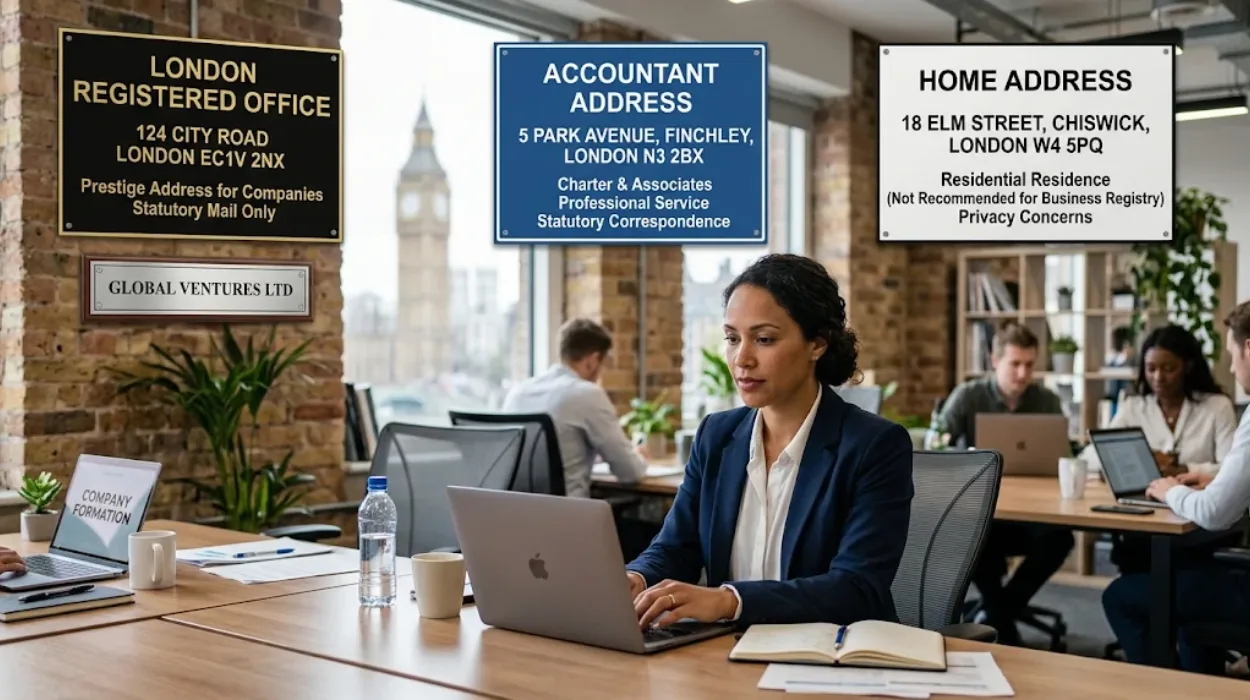
A director service address replaces the home address on the public register. Companies House and third parties send official correspondence to it. The overseas home address stays on the protected record and does not appear in public filings.
The service address is the address the public sees. It receives statutory notices, legal documents, and Companies House letters. The director chooses it at appointment.
Every director selects one address for service. A non-resident director chooses a UK address that receives mail reliably. The director records that address in the appointment section of the incorporation application. Companies House then displays it on the public officer record.
The registered office is a separate requirement. UK company law requires a registered office address within the UK. The registered office appears on the public register as well. The Non-Resident Privacy Shield supports non-UK residents who want a UK address on the register in place of a personal one.
A service address changes one visible field. It does not remove the director's legal duties. The director stays fully responsible for the company, its filings, and its compliance.
How Quickly Does a Non-Resident Company Form With Address Details Filed?
A company forms online in as little as three working hours when the submitted information is complete and accurate. Legal and ID checks must also be completed. Processing times depend on Companies House and exclude weekends and bank holidays.
The incorporation application captures both address types in a single submission. Companies House checks the details against its filing rules. It then registers the company and issues the certificate.
The Web Filing Authentication Code appears online on the company summary page. Companies House uses this code to authenticate future filings. Directors retain it for confirmation statements and officer changes.
Three conditions slow the process: incomplete documents, incorrect details, and technical or application-related complexity. Address formatting errors fall under incorrect details. A missing postcode or mismatched name triggers a Companies House query. Each query adds working days to the timeline.
Submit accurate residential and service addresses at the first attempt. The three-hour timeline holds only when the application passes every check without correction.
Which Service Protects Your Home Address During Incorporation?
The Non-Resident Privacy Shield is a service for non-UK residents who want their home address kept off the public register. It supplies a UK address for public filings at incorporation. The residential address stays on the protected record.
Privacy Shield addresses a specific exposure. Overseas founders file a home address that sits abroad. The service substitutes a UK address in the fields the public sees. This applies to the director service address and the registered office.
The service operates within Companies House rules. It does not hide information from Companies House or public authorities. It controls only what the public register displays.
Overseas founders compare options at the evaluation stage. They weigh which details Companies House publishes against which details stay private. The service closes the gap between those two lists.
Privacy Shield does not change legal ownership, director duties, or tax obligations. It changes the address that appears next to the director's name.
What Is the Takeaway for Overseas Company Directors?
Companies House keeps a director's overseas home address off the public register and publishes the service address instead. Credit reference agencies and public authorities retain access. Non-UK residents control public exposure by choosing a UK service address.
Companies House separates private data from public data. The residential address is private. The service address, name, country of residence, and month and year of birth are public. Each filing field follows that rule.
Overseas directors act at incorporation. They submit complete information, complete the ID checks, and select a service address. Those three steps shape the public record from the first day.
Non-Resident UK Company Formation delivers this outcome for non-UK residents through the Privacy Shield service that keeps your home address off the public register. The service pairs UK address provision with a structured incorporation process built for overseas clients.



0 comments
No comments yet — be the first to share your thoughts.