
Usual Residential Address vs Director Service Address: What Is Public and What Is Not?
Understand the difference between a usual residential address and a director service address in the UK. Learn which details appear on public Companies House records and how to protect your privacy.
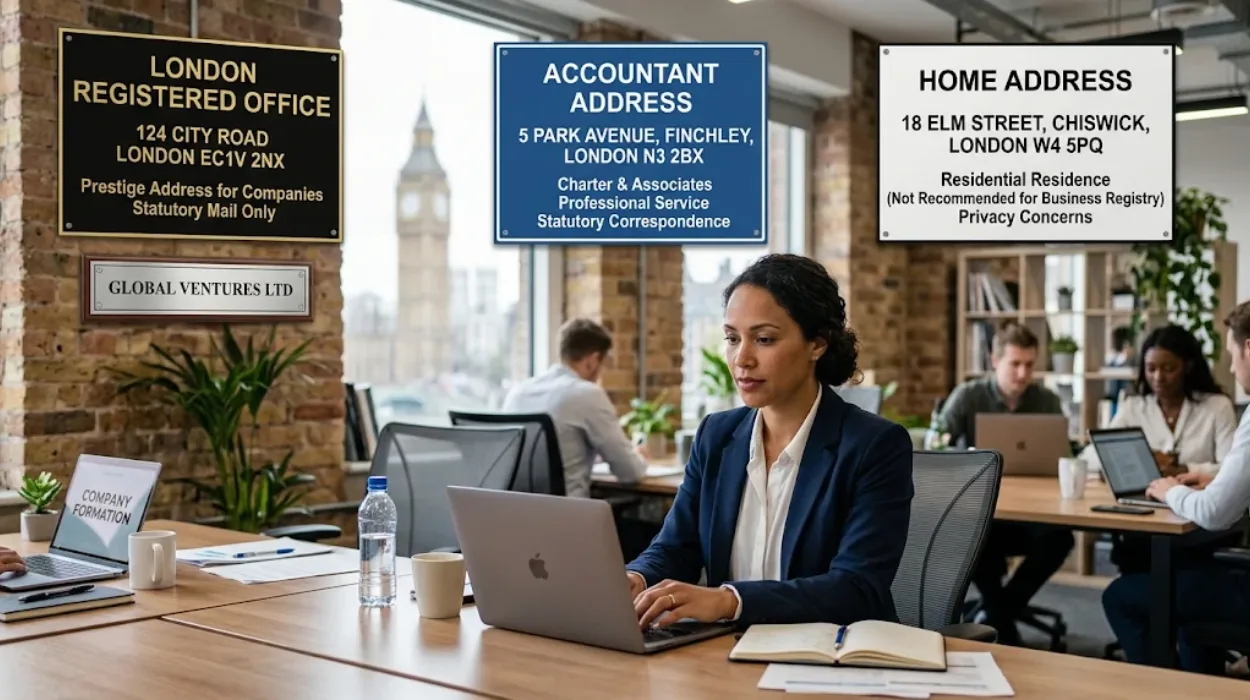
A director's service address appears on the public Companies House register. A usual residential address stays off the public register and reaches only specified public authorities and credit reference agencies. Companies House requires both addresses at incorporation, so each director holds one private address and one public address.
What Is a Usual Residential Address on the Companies House Register?
A usual residential address is the home where a director lives. Companies House records it for official purposes and keeps it off the public register. Only specified public authorities and credit reference agencies access it under the Companies Act 2006.
Every director supplies a usual residential address during company formation. For a non-UK resident, this is the overseas home address, including the country and postal code.
Companies House withholds this address from public search results. The public register displays the service address only.
Three groups receive access: police forces, HM Revenue and Customs, and credit reference agencies such as Experian and Equifax. Credit reference agencies use the address to verify identity and prevent fraud.
The address is a mandatory field on the incorporation application. Companies House rejects applications that omit it.
What Is a Director Service Address and Why Does Companies House Publish It?
A director service address is the contact address where official documents reach a director. Companies House publishes it on the public register because third parties require a legal point of contact. The address replaces the home address in public records.
The service address receives court papers, statutory notices, and Companies House correspondence. It must be a physical location where documents are delivered and recorded as received.
Directors choose among three options: the registered office address, a business address, or a home address. The choice decides what the public sees.
When you enter your home as the service address, Companies House publishes it in full. When you enter a separate address, the public register shows that address instead.
Which Company Details Are Public and Which Stay Private?
Public details include the director's name, service address, month and year of birth, nationality, country of residence, and occupation. Private details include the usual residential address and full date of birth, held by Companies House but not displayed publicly.
What appears on the public register?
The public register lists the registered office address, director names, appointment dates, and service addresses. Persons with significant control appear with name, month and year of birth, nationality, and service address.
Filed documents also appear publicly. Three examples: confirmation statements, annual accounts, and director appointment records.
What stays off the public register?
Companies House withholds the usual residential addresses of directors and persons with significant control. Full dates of birth stay restricted.
Identity verification records remain with Companies House. They do not appear on the register.
What Risks Come With Using an Overseas Home Address as a Service Address?
Using an overseas home address as a service address publishes it on the public register, where any person worldwide can search and view it free of charge. The address then stays visible in historic filings even after the director changes it.
Public register search is free and open to everyone. Commercial websites also republish register data, which extends the reach of a published address beyond Companies House.
Historic filings keep the address originally recorded. Removal requires a formal application to Companies House.
Directors who want the basics before comparing options can read Will Your Overseas Home Address Be Published on Companies House? for a foundational overview.
A separate service address prevents the problem at the source. The home address never enters a public filing.
How Does Incorporation Timing Affect Your Address Decisions?
Address decisions happen at incorporation, because the application requires both addresses. You form a company online in as little as 3 working hours when you submit complete, accurate information and complete all required legal and ID checks.
Companies House processes applications on working days. Weekends and bank holidays do not count toward processing time.
Your Web Filing Authentication Code appears online on your company summary page after registration. The code authorises later filings with Companies House.
Delays occur where information or documents are incomplete or incorrect. Technical or application-related complexities also require additional processing.
An error in an address field is incorrect information. Verify the postal code, country, and address type before submission.
Once Companies House registers the company, the service address appears on the register. Settle the choice before you file.
How Does the Non-Resident Privacy Shield Separate Public and Private Addresses?
The Non-Resident Privacy Shield supplies a UK director service address for the public register. The director's overseas home address is recorded only as the private usual residential address. This separation keeps the home address out of public search results.
Directors who want to keep their overseas home address off the public register with the Non-Resident Privacy Shield submit two addresses in one application. The UK service address goes to the public record. The overseas home address goes to the restricted record.
Three criteria support the evaluation: the coverage period, the address location, and the filings where the address appears. Those filings include appointment forms, confirmation statements, and officer records.
The package includes a 12-month UK director service address. Review the full terms of the 12-month UK director service address included in the Non-Resident Privacy Shield before you decide.
What Is the Takeaway on Public and Private Director Addresses?
A director's service address is public, and a usual residential address is private. Choosing a separate service address at incorporation keeps an overseas home address off the register. Complete, accurate address data also supports formation in as little as 3 working hours.
Companies House publishes the service address and restricts the residential address. The difference determines what any member of the public finds in a director search.
Non-Resident UK Company Formation provides UK company formation and business support services exclusively for non-UK residents. Its services cover the formation process and the administration of a UK company after incorporation, including the director service address option.



0 comments
No comments yet — be the first to share your thoughts.