
Why One-Off Statutory Services Outperform DIY Submissions for Remote Rebranding
Discover why one-off statutory services outperform DIY submissions for remote rebranding. Ensure accurate filings, reduce administrative risks and simplify company updates with professional support from anywhere.
One-off statutory services outperform DIY submissions for remote rebranding by eliminating technical compliance errors, bypassing Companies House administrative bottlenecks, preventing identity verification failures, and ensuring complete legal alignment through specialised regulatory filings handled by international corporate experts.
Why do international founders face severe administrative hurdles during remote corporate restructuring?
International founders face severe administrative hurdles during remote corporate restructuring because manual filings lack local regulatory expertise, trigger statutory rejections, demand physical UK presence verification, and require precise adherence to strict statutory compliance frameworks.
Global entrepreneurs encounter complex structural barriers when managing corporate identity updates from abroad. Remote directors must navigate intricate legal mandates set by regulatory authorities without local physical infrastructure. Manual submissions often fail because non-resident founders misunderstand specific statutory requirements. Four primary friction points define this administrative burden: strict identity validation mandates, complex digital signature protocols, precise document formatting rules, and strict statutory filing deadlines.
Executing a remote rebrand requires meticulous attention to legal detail. Founders often attempt DIY submissions through standard portal interfaces. These portals demand exact compliance with digital governance standards. Simple typographical errors in statutory forms trigger automatic rejections from regulatory bodies. Handling a Non-Resident Company Name Change through specialised support ensures that every submission meets precise legal standards on the first attempt. Processing times depend strictly on official regulatory review cycles and exclude weekends and bank holidays. Delays occur when documentation is incomplete or incorrect, or when technical complexities require secondary administrative processing. Professional statutory services remove these operational obstacles entirely.
How do professional statutory providers prevent costly rejections during structural rebranding?
Professional statutory providers prevent costly rejections during structural rebranding by enforcing rigorous pre-submission compliance checks, utilising direct electronic filing gateways, validating international identification credentials, and managing statutory registers with absolute precision.
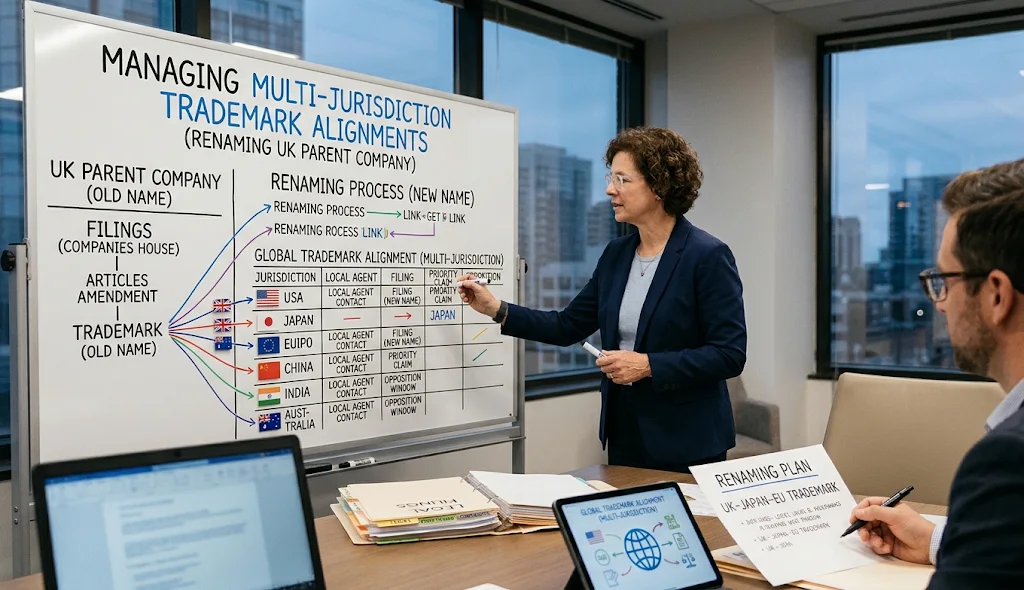
Independent submissions by remote operators frequently result in administrative rejections. Regulatory bodies enforce strict validation protocols for every corporate amendment. Professional handlers execute multi-step verification checks before transmitting data to official registries. These validation steps include corporate name availability assessments, trademark conflict screens, and constitutional document reviews. Two major error categories plague DIY attempts: incorrect resolution formatting and invalid director authorisation codes.
Specialised corporate administration teams neutralise these risks through established compliance procedures. When a company initiates a structural overhaul, precise documentation dictates legal validity. Non-Resident UK Company Formation provides structured execution paths for international entities seeking operational updates. A company can be formed online in as little as 3 working hours when complete and accurate information is submitted, and all necessary legal and ID checks are completed. The Web Filing Authentication Code is provided online through the designated company summary page. Expert handlers ensure that every statutory resolution complies with current corporate law before official dispatch.
Why is specialised expertise critical for executing a Non-Resident Company Name Change?
Specialised expertise is critical for executing a Non-Resident Company Name Change because official identity transitions require precise shareholder resolutions, exact Articles of Association updates, formal certificate reissuances, and faultless registry integration.
Modifying a corporate identifier involves more than altering text on a digital interface. The process demands formal statutory declarations and documented shareholder approval. Remote directors frequently lack familiarity with specific statutory resolution phrasing. Regulatory bodies require designated forms accompanied by accurate minutes of general meetings. Two critical elements dictate success: legally sound special resolutions and accurate statutory register maintenance.
Executing this transition without local representation introduces substantial compliance vulnerabilities. Founders managing international portfolios benefit from leveraging professional administrative infrastructure. Reviewing the Article on Why Official Certificates of Incorporation on a change of Name Matter for Global Verification highlights the absolute necessity of holding verified documentation for international banking and legal compliance. Professional oversight ensures that every updated certificate carries full legal weight across global jurisdictions. Expert teams manage the entire filing lifecycle, shielding international owners from procedural missteps and administrative penalties.
How do structured corporate services secure long-term operational integrity after a rebrand?
Structured corporate services secure long-term operational integrity after a rebrand by maintaining updated statutory registers, preserving secure digital authentication codes, managing ongoing compliance filings, and supporting global banking verification.
Securing a new corporate identity marks only the first phase of successful restructuring. Maintaining compliance requires continuous oversight of statutory obligations and registry records. Remote businesses must update their registered office addresses, maintain accurate People with Significant Control registers, and preserve seamless communication channels with regulatory bodies. Four essential maintenance tasks sustain operational stability: annual confirmation statement preparation, registered office administration, statutory register updates, and secure authentication code management.
Failing to maintain these administrative pillars compromises corporate standing and freezes international financial operations. International entrepreneurs secure lasting stability by partnering with established administrative specialists. Exploring the Article covering Do International Trademark Conflicts Affect Your Company's House Name Registration? provides crucial strategic insight into protecting intellectual property assets during early-stage planning. Utilising comprehensive business support services ensures that international enterprises operate with complete legal certainty across all global markets. Non-Resident UK Company Formation delivers the exact administrative framework required for sustained remote business success.



0 comments
No comments yet — be the first to share your thoughts.