
How Does Royal Mail Securely Dispatch Replacement Certificates to Overseas Addresses?
Learn how Royal Mail securely dispatches replacement certificates to overseas addresses, ensuring important UK company documents reach international directors through reliable delivery and secure handling procedures.
Royal Mail dispatches replacement certificates through tracked, signed-for international services. Each parcel carries a tracking number, travels through recognised customs channels, and requires a recipient signature on delivery. Non-Resident UK Company Formation arranges your Duplicate Certificate of Incorporation and sends it to your overseas address.
A replacement Certificate of Incorporation is an official legal document. Banks, regulators, and foreign partners accept only the original paper copy. Secure dispatch protects the document from loss, tampering, and misdelivery across borders. This article explains each stage of that journey for non-UK directors.
What Is a Duplicate Certificate of Incorporation and Why Do Overseas Directors Order One?
A Duplicate Certificate of Incorporation is an official replacement copy of the original certificate issued by Companies House. Overseas directors order one when the original is lost, damaged, or held in another country and a third party demands paper proof.
The Certificate of Incorporation confirms that a UK limited company exists. It states the company name, the company number, and the date of incorporation. Companies House issues the original when it registers the company. Every UK limited company holds one.
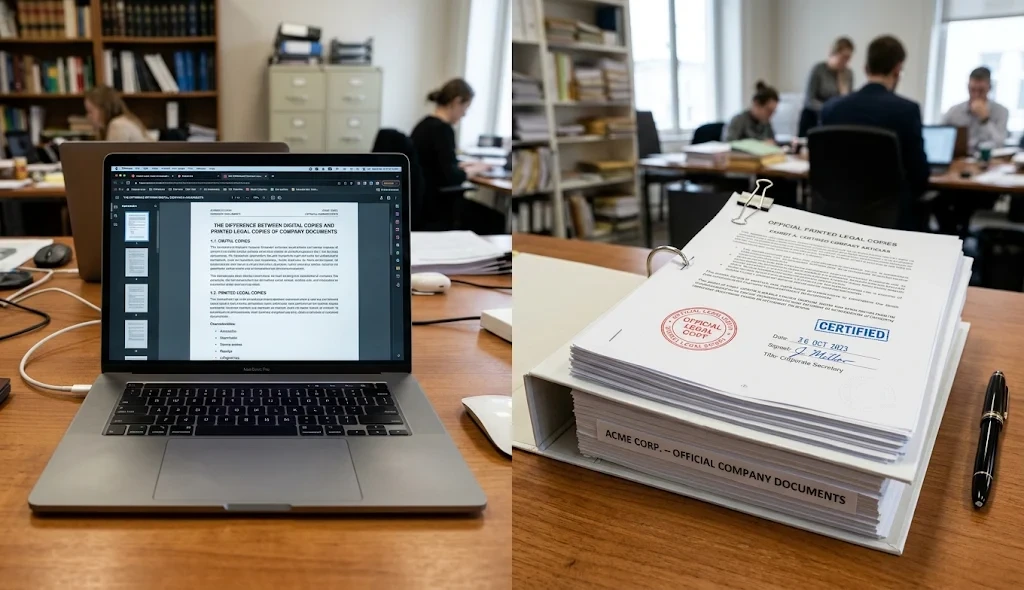
Non-resident directors often hold the original in a different country from where they trade. A bank in Dubai, a supplier in Singapore, or a licensing office in Lagos may request the paper certificate. A digital printout does not satisfy these requests. Readers who want the full reasoning behind that gap can read why standard printouts fail when third parties demand official incorporation proof.
A replacement restores the paper record without altering the company's legal status. The company number, name, and incorporation date remain identical to the original. Directors who want this outcome can order a Duplicate Certificate of Incorporation delivered to their overseas address and track it from dispatch to signature.
How Does Royal Mail Track a Replacement Certificate to an Overseas Address?
Royal Mail assigns a unique tracking number to each tracked international parcel. The number records every scan from collection through export, customs, and final delivery. Senders and recipients view these scan events online until the parcel reaches the destination address.
Tracked international services work through scan points. The first scan happens when Royal Mail accepts the parcel. A second scan records export from the United Kingdom. Further scans occur when the destination country's postal operator receives the parcel.
The tracking number is a reference code attached to the parcel label. It links to a live event history. A director enters the code on the Royal Mail tracking page. The page shows the latest recorded location and status.
Tracking depth varies by destination. Some countries return a full scan history to Royal Mail. Others return fewer events after handover. A parcel to Germany or Canada typically shows more partner scans than a parcel to a remote region. Directors confirm coverage for their country before placing an order.
The service provider shares the tracking reference once dispatch is complete. The director then monitors the parcel independently. This removes uncertainty during the transit period.
Why Does Signature on Delivery Protect Your Certificate of Incorporation?
Signature on delivery records who receives the parcel and when. The carrier refuses to release the certificate without a signature. This creates a documented chain of custody that blocks unauthorised collection and misdelivery.
A signed-for service adds proof of delivery to the tracking record. The delivery agent requests a signature at the door. The agent records the signature, the date, and the time. That record becomes evidence if a dispute arises.
The Certificate of Incorporation carries legal weight. A stolen or intercepted copy exposes the company to impersonation risk. Fraudsters use incorporation documents to open accounts or submit false applications. Signature capture reduces that exposure.
The recipient must be present or nominate a trusted person at the address. Directors confirm the delivery contact before dispatch. A reliable contact accepts the parcel and signs for it. Where no one is present, the carrier leaves a collection notice instead of the parcel.
Collection notices direct the recipient to a local delivery office. The office releases the parcel against identification and signature. This keeps the certificate under controlled custody at every stage.
What Information Does the Dispatch Process Require From Non-Resident Directors?
The dispatch process requires the company name, the company number, and a complete overseas delivery address. A contact phone number and a named recipient complete the record. Accurate details prevent customs holds and failed delivery attempts.
Three address elements decide whether a parcel reaches its destination: the street address, the postal code, and the country. Missing any element causes sorting errors. A single incorrect digit in a postal code redirects the parcel to the wrong delivery office.
A named recipient matters for signature capture. The delivery agent matches the name on the label to the person signing. A company name alone invites rejection at some addresses. Individuals at residential buildings supply the name registered with the building's mail room.
A contact phone number supports delivery coordination. Carriers in many countries phone the recipient before attempting delivery. The number must include the international dialling code. A local format without the country prefix fails on cross-border calls.
The company details tie the replacement to the correct company record. Non-Resident UK Company Formation validates the company name and number against Companies House records before placing the request. This prevents processing errors caused by mismatched details.
Directors who manage several documents remotely benefit from a consistent record system. For a wider view of that practice, read how non-resident directors can maintain complete UK corporate paperwork remotely.
How Long Does International Delivery of a Replacement Certificate Take?
Delivery time has two stages: Companies House processing and international transit. Processing excludes weekends and bank holidays. Transit varies by destination country, customs clearance, and the local postal operator's handling speed.
Companies House processes each request within its working calendar. Weekends and UK bank holidays do not count toward processing time. A request submitted on Friday evening begins processing on the next working day.
Delays occur when information or documents are incomplete or incorrect. Technical or application-related complexities also extend processing. An accurate submission avoids these delays. A complete address, a valid company number, and a matching recipient name form the baseline.
Transit begins once Royal Mail accepts the parcel. Transit duration depends on the route between the United Kingdom and the destination. European destinations clear faster than distant regions. Customs inspection adds time in countries with stricter import checks.
Documents such as certificates carry no commercial value, so customs treatment is simpler than for goods. Customs officers still inspect parcels at their discretion. The tracking record shows when a parcel enters customs and when it exits.
Directors who need the certificate by a fixed date submit the request early. They allow extra days for holidays in the destination country. Public holidays abroad pause local delivery just as UK holidays pause processing.
What Happens if a Replacement Certificate Is Delayed or Lost in Transit?
The tracking record shows the last confirmed scan location. Royal Mail investigates delayed or missing parcels using that record. The service provider then reissues the request when the carrier confirms the parcel is lost.
Delays follow predictable patterns. A parcel stalls at customs, waits at a local depot, or returns after a failed delivery attempt. The tracking history identifies which pattern applies. Each pattern has a different remedy.
A customs hold requires the recipient to answer inquiries from the local customs office. The office may ask for the sender's details or the purpose of the document. The recipient replies with accurate information. The parcel then proceeds to delivery.
A failed delivery attempt leaves a notice. The recipient collects the parcel from the delivery office within the stated holding period. Missing that period returns the parcel to the sender. Directors act on notices promptly for this reason.
True loss is rare but documented. Royal Mail opens a trace when a parcel passes its expected delivery window without a final scan. The trace uses scan data and partner operator reports. The provider reissues the Duplicate Certificate of Incorporation once the carrier confirms the loss. Because every document in the chain is trackable, the process leaves no gap in custody records.
Which Route Delivers a Replacement Certificate Most Reliably?
A tracked, signed-for dispatch with an accurate address and a named recipient delivers the replacement certificate most reliably. This route combines scan visibility, signature capture, and a documented chain of custody from Companies House to your door.
Secure dispatch rests on three controls. Tracking provides visibility. Signature capture provides accountability. Accurate delivery details provide direction. Removing any control raises the risk of loss or delay.
Non-resident directors face distance, time zones, and customs processes. These factors make careful dispatch more important than for domestic mail. A Duplicate Certificate of Incorporation restores a legal document, so the delivery method carries equal importance to the document itself.
Non-Resident UK Company Formation delivers this process for non-UK residents exclusively. The team validates company details, submits the request, and shares the tracking reference after dispatch. Directors receive an official replacement certificate at their overseas address with a full delivery record.



0 comments
No comments yet — be the first to share your thoughts.